
How to Store Family Photos, Papers & Keepsakes So They Survive
Family photographs, letters and certificates degrade for very specific, well-documented reasons — damp, light, acid and pests. This guide explains the conservation science in plain terms and how to store keepsakes properly, at home or in managed storage in West Sussex.
Family photographs, letters and keepsakes last longest at around 30–40% relative humidity and a steady 15–21°C, away from direct light. Paper-based documents tolerate a slightly wider range — roughly 35–60% RH and 13–20°C — but both degrade fastest not from a single bad day, but from repeated swings between damp and dry. A loft that sweats in August and freezes in January does more damage over ten years than a slightly imperfect but stable room.
Photographs and personal papers are usually the most irreplaceable things a family owns, and also some of the most fragile. Unlike furniture or electronics, damage to a photograph or a handwritten letter cannot be repaired or replaced — once emulsion has stuck to glass, or foxing has spread across a marriage certificate, it is permanent. This guide sets out what actually causes that damage, the conditions conservators use as a benchmark, and how to pack and store family photographs, albums, letters, deeds and certificates so they survive to be handed down.
Why do old photos and papers actually degrade?
Photographs and paper degrade through four distinct mechanisms — damp, light, acidity and pests — each of which behaves predictably and is well documented by UK conservation bodies. Damp attacks first: at around 70% relative humidity, mould can establish on paper and photographic emulsion in roughly three months; above 90% RH, it can take hold in days. That is why how long something sits in the wrong conditions matters as much as the number on a hygrometer.
Light causes a slower, quieter damage — UV and even ordinary daylight fade inks, photographic dyes and pigments irreversibly, which is why negatives and prints stored in a bright loft window or a garage skylight fade faster than ones kept in a dark box. Acidity comes from the materials themselves: ordinary cardboard, newsprint and old brown envelopes are acidic and slowly yellow and embrittle anything stored inside them, including the photographs and papers they were meant to protect.
Pests are the mechanism people notice last and regret most. Silverfish and booklice (psocids) thrive in damp, poorly ventilated storage and graze on paper fibres, photographic emulsion and the glue in old albums — different pests to the moths and woodworm that attack textiles and furniture, and a strong sign that humidity has been too high for too long.
What humidity and temperature should photos and documents be kept at?
Photographs should be kept at 30–40% relative humidity and 15–21°C; paper documents tolerate a slightly wider 35–60% RH and 13–20°C. Photographs need the narrower range because photographic emulsion is more chemically sensitive to moisture than plain paper fibres, so a box of prints is more easily damaged by damp than a folder of certificates or letters — even though both are harmed by the same underlying problem.
| Item | Ideal conditions | What damages it |
|---|---|---|
| Photographs & negatives | 30–40% RH, 15–21°C, dark | Mould above ~65% RH, fading in light, emulsion sticking in damp |
| Paper documents & letters | 35–60% RH, 13–20°C | Foxing, embrittlement, silverfish and booklice |
| Albums & scrapbooks | Stable RH, away from acidic covers | Glue failure, page-to-page sticking, cover acid migration |
| Certificates & deeds | Flat, dry, out of sunlight | Fading of ink and seals, folds becoming permanent tears |
These bands come from UK conservation guidance including the National Archives and the current British Standard for the storage of paper-based archival materials, BS 4971:2017 (which succeeded the older PD 5454). The detail that competitors and DIY guides usually skip is that the stability of the environment matters as much as hitting the ideal percentage — a room that holds a slightly-off 50% RH steadily all year does less damage than one that swings between 30% and 75% with the seasons.
A steady, unremarkable environment beats a “perfect” one that never stops moving.Conservation guidance in practice, not in theory
Where should family photos and papers never be kept?
Attics, garages and basements are the three worst places to store family photographs and paperwork, because all three are prone to the same fault: large, repeated swings in temperature and humidity across the seasons. A loft bakes under the roofline in summer and drops close to freezing in winter; a garage with a concrete floor and no insulation does much the same, plus rising damp from the slab; a basement often sits at a more stable temperature but with humidity that creeps upward, especially near external walls.
Photographs and papers left in any of these spaces for years are the ones that turn up with stuck-together album pages, curled negatives, and certificates spotted with foxing. Boxes kept directly on a garage floor or hard against an external wall are at the highest risk, because both surfaces transmit damp and cold directly into the cardboard.
- Off the floor — even a few inches of clearance reduces damp transfer from a concrete slab.
- Away from external walls — walls facing outside carry more cold and condensation than internal ones.
- Somewhere temperature-stable — a spare room or hallway cupboard beats a loft or garage every time.
- Never sealed plastic bags — these trap moisture against paper and emulsion rather than keeping it out.
A sealed, dry container held indoors is a genuine step up from a garage or loft for exactly this reason: it removes the outdoor swing entirely. It is worth reading that as clean, dry, managed overflow storage rather than a specialist archival or records-management service — a distinction covered honestly further down this guide.
How should photos and papers be packed for storage?
Photographs and papers should be packed in acid-free, lignin-free boxes with photographs kept flat and separated from paper documents, never packed loose together in the same folder. Ordinary cardboard boxes and brown envelopes are acidic and will slowly yellow and embrittle anything stored inside them over years, which is the single most common packing mistake in family archives.
Photographs specifically should go into individual polyester, polypropylene or polyethylene sleeves — the clear, inert plastics used by photo conservators — never PVC pockets, ordinary sandwich bags, cling film or rubber bands, all of which can chemically react with or physically stick to photographic emulsion over time. Old “magnetic” self-adhesive albums from the 1970s–90s are worth specifically checking: their adhesive continues to react with photographs decades later and is one of the most damaging storage formats still in common use.
- Acid-free boxes — for both photographs and paper documents, replacing old cardboard boxes and folders.
- Polyester or polypropylene sleeves — one photograph per sleeve, never loose stacks touching each other.
- Flat, not rolled or folded — new creases in old paper tend to become permanent tears.
- Separate photographs from paper — different materials, different chemistry, best not mixed in one folder.
- Label the outside of the box — so boxes are not opened and re-handled more than necessary once packed.
Protecting photos and papers when clearing a family home
Clearing a parent’s or grandparent’s house is usually when the largest volume of family photographs, letters and certificates gets found at once, often in the very lofts and garages this guide flags as the worst places for them. The emotional and practical side of that process — what to keep, what to sell, what to let go of — is covered fully in our guide to downsizing and probate storage; this section is just the physical safeguard: box photographs and papers properly before they go anywhere, even into short-term storage, rather than leaving them in the same loft boxes they were found in.
How do we store photos and keepsakes, and what are the limits?
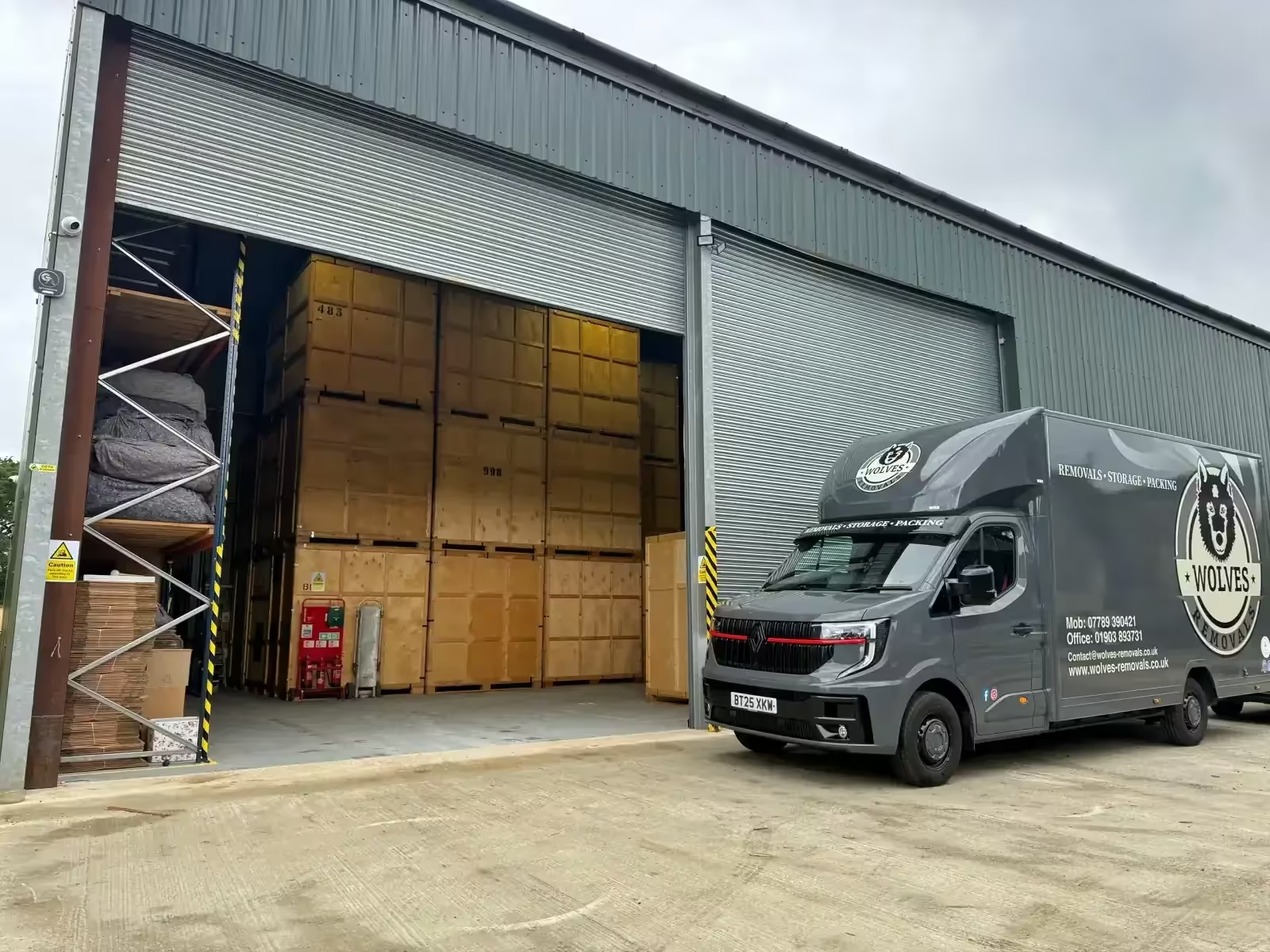
Wolves Storage holds boxed keepsakes in a sealed, private wooden container inside an alarmed, 24/7 CCTV, indoor warehouse in Ashington, West Sussex — dry and ventilated, not an outdoor yard or unheated unit. Each container is fully insured, and storage is managed rather than self-access: our team collects boxes from the door across West Sussex and redelivers on 24 hours’ notice, so photographs and papers are not being repeatedly handled or re-boxed once packed correctly.
That is a genuinely better environment than a garage or loft for the reasons already covered — indoors, out of direct light, without the seasonal swing that causes foxing and mould. It should not be read as more than that: this is clean, dry, managed overflow storage, not a monitored, humidity-controlled archival or records-management facility, and it does not include scanning, retrieval-by-item or archival cataloguing services. For families who simply need photographs and papers kept safely out of a loft or garage while a house is sold, downsized or renovated, that honest level of care is exactly what is needed — nothing oversold.
Wolves has stored family belongings across West Sussex since 2016 and is a member of Checkatrade; the same containers and collection service also suit furniture and household items during a move, with the seasonal side of that covered in our guide to winter furniture storage.
How much does storing keepsakes cost, and how does it work?
Storage starts from £21 a week per sealed container, with no deposit and flexible weekly terms — a box of family photographs sits inside the same container as everything else being stored, at no extra cost for the material inside it. Longer-term storage, which suits the years-long timescale that photographs and papers are usually kept for, is covered on our long-term storage page, with full current pricing on the pricing page.
Getting boxes into storage starts with a call or a quick form on our contact page — our team collects from the door anywhere across West Sussex, so photographs and papers packed correctly at home never need to sit in a loft or garage waiting for a better option.
Frequently Asked Questions — The right way to store family photos & keepsakes
The questions West Sussex customers ask us most.
Family photographs last longest at roughly 30–40% relative humidity and a stable 15–21°C, away from direct light. Photographic material is far more sensitive to damp than ordinary paper, and swings above about 65% RH create real mould risk within weeks rather than years.
Lofts and garages are two of the worst places to store family photos and papers because both swing between damp and dry with the seasons. A cold garage that sweats in winter and bakes in summer puts photographs and documents through exactly the repeated humidity cycling that causes foxing, emulsion damage and embrittlement.
Foxing is the brown, blotchy age-spotting that appears on old photographs and paper, caused by a mix of impurities in the material and damp storage conditions. Foxing cannot be reversed at home, but its spread can be slowed by moving affected items into stable, dry conditions and away from acidic boxes or albums.
Acid-free, lignin-free boxes and albums are the safe choice for photographs and personal papers, because ordinary cardboard and newsprint-grade paper are acidic and cause yellowing and brittleness over time. Photographs should also be kept in polyester, polypropylene or polyethylene sleeves — never PVC pockets, cling film, rubber bands or old “magnetic” self-adhesive albums.
Wolves Storage containers are held indoors in an alarmed, dry, ventilated warehouse in Ashington, West Sussex, not left outside or in an open yard. That is a far more stable environment for boxed keepsakes than an unheated garage or loft, though it should be understood as clean, dry managed storage rather than a monitored archival facility.
Storage with Wolves starts from £21 a week per sealed container for storage and insurance, with no deposit and flexible weekly terms; collection and redelivery are quoted separately. The rate stays the same whether a container holds a few boxes of photographs or a full household. Full current pricing is on the pricing page.
Still have a question? Talk to the family team
Store Without Lifting a Finger — The right way to store family photos & keepsakes
Storage from just £21 a week with no deposit — collection and redelivery quoted separately, upfront. Free, no-obligation quote within 24 hours.
We’re Trusted By