
Will My Furniture Survive a Sussex Winter in Storage?
The condensation science behind why unheated units ‘sweat’ in winter — and how a dry, ventilated container keeps furniture, leather and electronics safe.
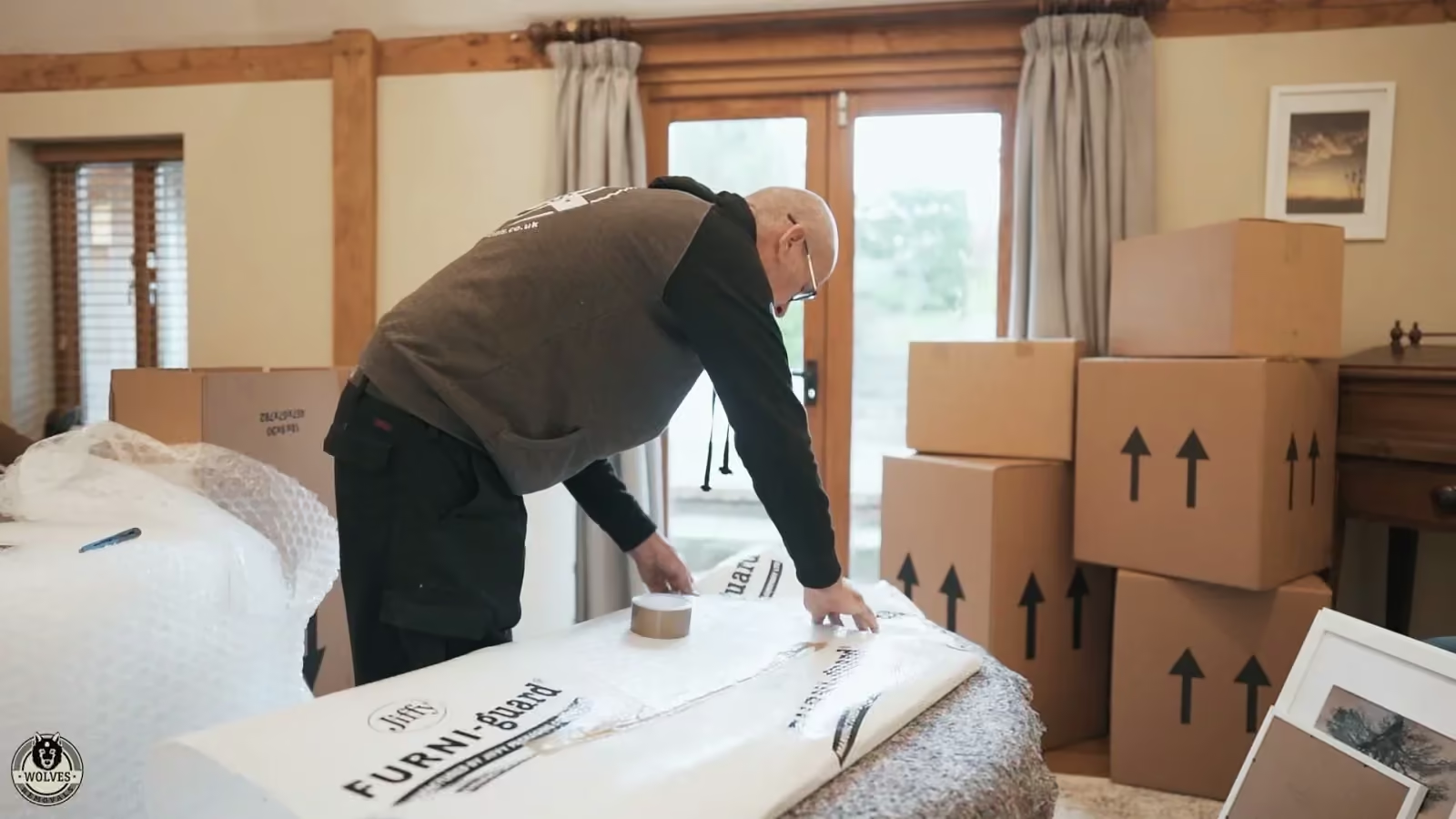
Managed container storage protects furniture through a Sussex winter by keeping it in a dry, ventilated building rather than an unheated metal unit, where cold surfaces drop below the dew point and condensation forms. Wolves Storage Sussex loads and seals your furniture into wooden containers stored in a dry, alarmed warehouse in Ashington, West Sussex, from £21 a week.
Most damage to furniture in storage isn’t dramatic. It’s slow — damp, condensation and mould creeping in over a cold, wet British winter. Below is the actual science of why that happens, and how to make sure it doesn’t happen to yours.
Why do unheated storage units get damp in winter?
Unheated storage units get damp in winter because their cold metal walls, roof and roller door drop below the dew point of the surrounding air, so water condenses on them — no leak needed. Thin metal has almost no thermal mass, so it cools fast and “sweats” whenever milder, moisture-laden air arrives.
A cold metal unit doesn’t need a leak to get wet — it condenses water straight out of the air the moment milder, damp weather arrives.The condensation trap
A British winter is the perfect recipe for it: long cold spells broken by milder, wet weather, so warmer damp air keeps meeting cold metal and condensing on it. It gets worse as the temperature falls, because the same amount of moisture in cold air is a far higher relative humidity than in warm air. A cold drive-up unit can therefore sit above the level where mould grows for weeks at a time, even when there is no visible water. UK archival storage guidance — the National Archives’ environmental-management standards and the British Standard BS 4971:2017 (which replaced PD 5454) — recommends controlled humidity and ventilation for exactly this reason: to keep surfaces above the dew point and stop pockets of stagnant, damp air forming.
At what humidity does mould grow on stored furniture?
Mould grows on stored furniture once relative humidity stays above about 70%, where it can take hold within roughly three months; at 90% it can appear within days. That is why storage duration matters as much as the humidity itself: the longer furniture sits in a damp space, the higher the risk.
| Relative humidity | Mould risk on furniture |
|---|---|
| Below ~65% | Effectively safe |
| ~70% | Mould in ~3 months |
| ~90% | Mould in days |
Source: UK conservation guidance — The National Archives on environmental management of stored materials.
Which household items suffer most in a cold storage unit?
Solid wood, leather, upholstery, mattresses and electronics are the household items that suffer most in a cold, damp storage unit, because each one either absorbs moisture from the air or attracts condensation when warmer, damp air meets a cold surface. The damage is gradual and often invisible until the item comes back out.
- Solid wood and veneers are hygroscopic — they take on and give off moisture with the surrounding air, so a unit that swings between damp and dry can warp joints, lift veneer and crack panels.
- Leather needs steady, moderate humidity (around 45–55% RH). Too damp and it grows mould; too dry and it stiffens and cracks — and sealing it in plastic makes both worse.
- Upholstery and mattresses act like sponges; they are usually the first things to smell musty or spot with mould after a damp winter.
- Electronics and metal-framed items attract condensation when cold meets warmer, moist air — the same dew-point effect that makes the unit itself “sweat”.
- Paper, books and photographs cockle and spot (“foxing”), and ordinary cardboard or newspaper packed against them can leave acidic marks.
Across our winter collections in West Sussex, the pieces that come out of unheated garages and metal lock-ups in the worst condition are almost always solid-wood furniture, leather and mattresses. A dry, ventilated long-term storage environment is what keeps each of these materials in the condition it went in.
How should you prepare furniture for storage?
Prepare furniture for storage by cleaning and fully drying it, conditioning leather and wood, and covering it with breathable blankets — never airtight plastic, which traps moisture and causes mould or cracking within months. Keep everything off the floor and away from external walls, where damp collects.
How does Wolves Storage Sussex protect furniture for winter storage?
Wolves Storage Sussex protects furniture for winter storage by collecting it from your door, wrapping it in breathable covers, and sealing it into a logged wooden container kept in a dry, ventilated and alarmed warehouse in Ashington, West Sussex. Nothing is left exposed to the cold or handled again until you ask for it back.
Keeping every surface above the dew point and the air moving is what stops condensation forming through a West Sussex winter. Every container is logged and fully insured while it is with us — see the full process on our how it works page.
Does storage insurance cover damp or mould damage?
Storage insurance usually does not cover damp, condensation or mould — these are standard policy exclusions, treated as preventable rather than sudden events. That means the storage environment, not the insurance certificate, is your real protection against the most common form of storage damage.
The damage that ruins most stored furniture — damp and mould — is the one loss a storage policy usually won’t pay for. The dry environment, not the certificate, is your real protection.Damp & mould — a standard UK storage insurance exclusion
It’s a point worth pausing on. You can insure against fire, flood and theft, but the slow damage that actually ruins most stored furniture — damp and mould — is the thing a policy typically won’t pay out on. So a dry, ventilated, managed building isn’t a luxury; it’s the risk control that matters most.
Is a managed storage company responsible for your furniture?
A managed storage company that collects, packs, seals and stores your furniture usually takes on a higher duty of care than a self-storage unit, because under UK law taking your goods into its keeping can create a bailment. A self-storage unit is normally only a licence to occupy space, with your belongings kept there at your own risk.
How long can furniture safely stay in storage?
Furniture can stay in storage safely for as long as you need, provided the environment stays dry — because the risk to stored furniture comes from damp and mould, not from time itself. A few months in a damp, unheated unit can do more harm than years in a dry, ventilated one.
It’s the damp, not the time. Well-prepared furniture can sit in a dry, ventilated container through a winter or a long renovation — but in a cold, damp unit, every week adds to the risk.The environment matters more than the length of stay
What should you do when furniture comes out of storage?
When furniture comes out of storage, let it acclimatise to room temperature before you unwrap it or switch anything on, because a cold item brought into a warm room can attract condensation just as a cold unit does. Give solid wood, leather and electronics a day to settle.
What does managed furniture storage cost in West Sussex?
Managed furniture storage with Wolves Storage Sussex starts at £21 a week for the storage itself, with no deposit and collection and redelivery quoted upfront. The fair comparison with a “cheaper” self-storage unit has to include the costs a unit quietly adds on top of the advertised rent.
Managed container storage vs a self-storage unit in winter
For winter storage, a managed container in a dry, ventilated warehouse protects furniture far better than an unheated drive-up unit, because the building is kept above the dew point and the air keeps moving, instead of your belongings tracking the cold and damp outside.
| Managed container | Unheated drive-up unit | |
|---|---|---|
| Environment | Dry, ventilated warehouse | Tracks the cold outside |
| Condensation | Surfaces above dew point | Metal “sweats” |
| Wrapping | We seal it breathably | You wrap it (often in plastic) |
| Your effort | We collect & store | You drive & carry |
For furniture going into long-term storage over a winter or longer, the dry environment is what keeps it in the condition it went in. We collect from your door across West Sussex, from £21 a week.
Frequently Asked Questions — Will my furniture survive a Sussex winter?
The questions West Sussex customers ask us most.
Not in a dry, ventilated, managed store. Damp and mould form when furniture sits in an unheated unit whose cold surfaces drop below the dew point. A managed container in a dry, ventilated warehouse keeps surfaces above the dew point, so condensation doesn't form.
No. Airtight plastic traps moisture against the furniture, which causes mould on fabric and wood and can dry out and crack leather within months. Use breathable furniture blankets or cotton covers instead.
Indefinitely in a dry, managed store. The risk to stored furniture comes from damp, not time — so the quality of the environment, not the length of stay, is what matters.
Usually not. Damp, condensation and mould are standard exclusions on storage insurance because they are considered preventable, so a dry, ventilated, managed environment is your real protection.
Still have a question? Talk to the family team

Store Without Lifting a Finger — Will my furniture survive a Sussex winter?
Storage from just £21 a week with no deposit — collection and redelivery quoted separately, upfront. Free, no-obligation quote within 24 hours.
We’re Trusted By