
How to Pack Furniture for Storage Without Wrecking It
Why you should never seal solid wood or leather in plastic, what acid-free tissue is really for, and the packing mistakes that cause damage months later.
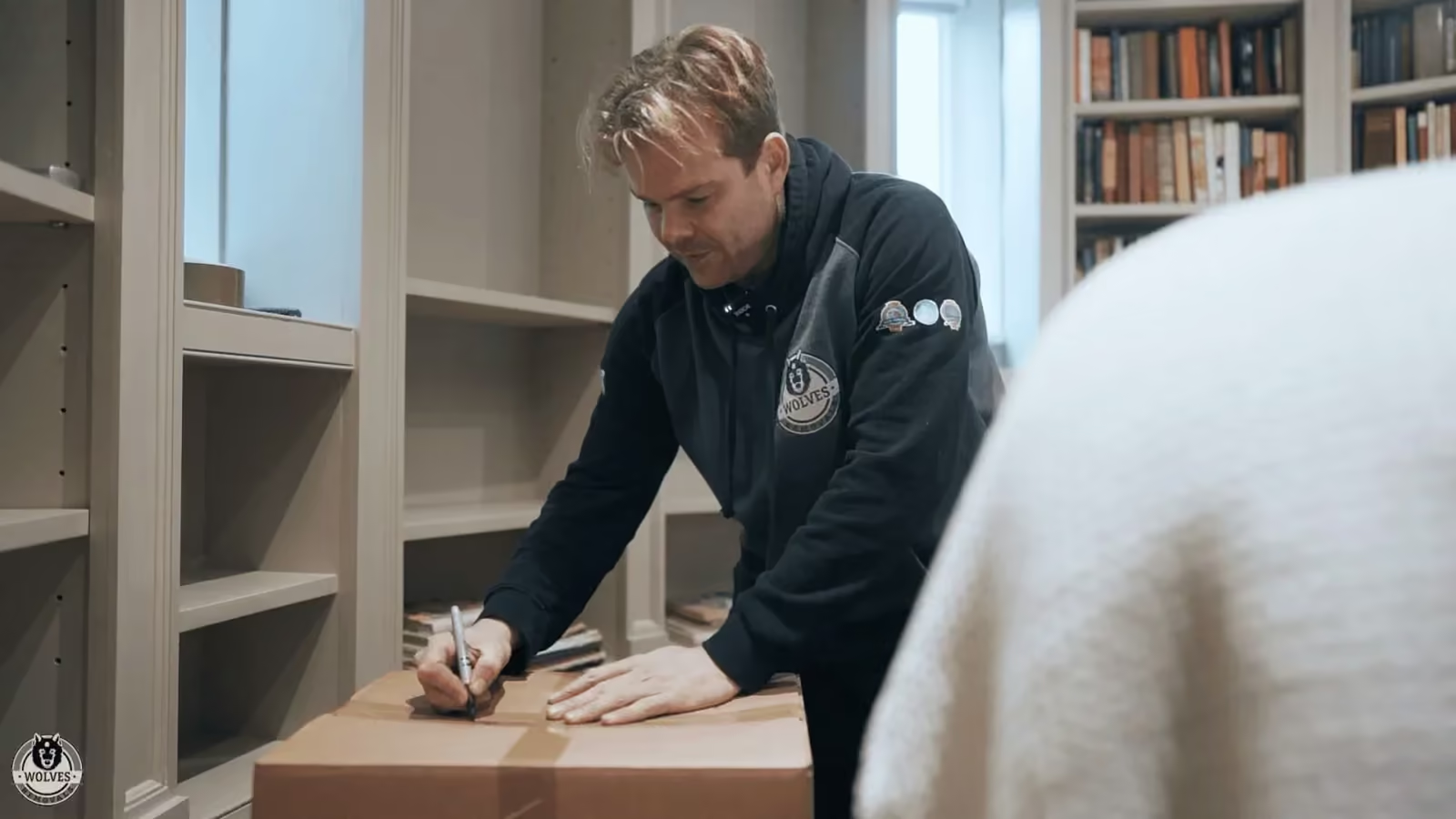
Pack furniture for storage by cleaning and drying it, wrapping it in breathable covers and lifting it off the floor — never sealing wood, leather or upholstery in airtight plastic. The single most common cause of mouldy, musty furniture coming out of storage is plastic that traps moisture against it — the same reason UK conservation guidance avoids airtight packaging.
Good packing is what decides whether furniture comes back in the condition it went in. Below is how to prepare and wrap each type properly, what to use instead of plastic and newspaper, and the mistakes that cause damage months later.
How do you prepare furniture before storing it?
Prepare furniture before storage by cleaning it thoroughly, drying it completely, conditioning leather and wood, and dismantling what you can. Anything packed away dirty or damp will feed mould as soon as the container is sealed, so preparation matters more than the wrapping itself.
- Clean every surface and let it dry fully — especially upholstery and anything that has been outdoors.
- Condition leather and wood so they go into store supple, not dry and brittle.
- Dismantle where practical — bed frames, tables and flat-pack — and bag the fixings, taped to the piece.
- Empty and dry white goods, leaving the doors ajar so nothing sours inside.
Should you wrap furniture in plastic for storage?
No — you should not wrap solid wood, leather or upholstery in airtight plastic for storage. Plastic seals moisture against the surface, and once the container is closed that trapped damp has nowhere to go: fabric and wood grow mould, and leather can stiffen and crack within months. Breathable blankets or cotton let the material breathe instead.
Wrapping a sofa or a wooden chest tightly in plastic feels protective — but it is the single most common cause of musty, mouldy furniture coming out of storage.The mistake we see most
How do you pack different types of furniture?
Pack each material to suit how it reacts to moisture: wrap solid wood and leather in breathable covers, stand mirrors and glass upright and padded, and clean and fully dry upholstery before covering it. The table below covers the pieces people most often store.
| Item | How to pack it |
|---|---|
| Solid wood & veneer | Dust, wax, wrap in breathable blankets; pad the corners |
| Leather | Clean, condition, cover with cotton — never plastic |
| Sofas & mattresses | Clean, dry fully, cover with breathable fabric, store flat |
| Mirrors, glass & art | Pad and stand upright; acid-free tissue on polished faces |
| Electronics | Original boxes if you can; keep dry; let them acclimatise |
How should you stack furniture in storage?
Stack furniture in storage with the heaviest, sturdiest pieces at the base, nothing resting on upholstery or polished tops, and a little air space between items. Protect surfaces with blankets where they touch, and store mattresses flat rather than folded on edge.
- Heaviest, sturdiest items at the bottom, lighter and more fragile on top.
- Nothing heavy on sofas, mattresses or polished surfaces — they dent and mark.
- Blankets between pieces that touch, to stop rubbing and scuffs.
- A small gap for air, so nothing sits pressed against a cold surface.
What should you not use to pack furniture?
Don’t use airtight plastic, ordinary newspaper or cardboard against polished surfaces, or any damp materials. Plastic traps moisture; newspaper and cardboard are acidic and can mark a finish; and anything stored damp will grow mould once it is sealed in.
- Airtight plastic or shrink wrap on wood, leather or fabric.
- Newspaper or ordinary cardboard against polished or painted surfaces — use acid-free tissue.
- Damp blankets, covers or items — everything goes in dry.
- Overfilled drawers or boxes that crush whatever sits beneath them.
How much space does packed furniture actually take up?
Packing is not only about protection — it also decides how much space you end up paying for. Each of our containers holds 250 cu ft (5ft × 7ft × 8.6ft), roughly the contents of a one-bedroom flat, and how neatly a load goes in is often what decides whether a house needs two containers or three. A dismantled bed frame stacks flat against a wall; an assembled one swallows a large share of a container on its own. Boxes packed to a consistent size stack square to the ceiling; a jumble of carrier bags and half-filled crates does not stack at all.
As a rough guide, a one-bedroom flat usually fits one container, a two-bedroom house two, a three-bedroom house three, and a larger three- or four-bedroom house four. The weekly rate follows the same ladder — £21 a week for one container, £42 for two, £63 for three and £79 for four — and that rate covers the storage and the insurance, with collection and redelivery quoted upfront as a separate charge based on volume and distance. If you are not sure which rung you land on, our storage size guide works it through room by room, and the full breakdown sits on the pricing page.
A worked example: packing a two-bedroom house
Here is the order we would tackle a typical two-bedroom house in. The sequence matters more than the speed: the heavy, dismantled and awkward things need to be dealt with before boxes start covering the floor and blocking the doorways.
Two bedrooms’ worth of furniture — two bed frames, two mattresses, wardrobes, a chest of drawers, a sofa, a dining table and chairs and thirty-odd boxes — generally sits inside two containers. That is £42 a week for the storage and insurance, with collection and redelivery quoted upfront and separately before anything is booked. Pack the same load loosely and you can easily spill into a third container. That is the practical case for dismantling: it is not tidiness for its own sake, it is a rung on the price ladder. The mechanics of collection day are set out in how managed storage works, and the containers themselves in container storage.
What packing materials do you actually need?
Far less than the internet suggests — but the few things that matter are worth getting right. The table below is the working kit for furniture: what each item is for, and the cheap substitute that quietly causes the damage.
| What to use | What it is for | What not to substitute |
|---|---|---|
| Breathable furniture blankets | Wrapping wood, headboards and cabinet sides | Shrink wrap or bin bags |
| Cotton sheets or dust covers | Sofas, leather and upholstered chairs | Airtight plastic covers |
| Acid-free tissue | Sitting directly against polished, painted or gilded faces | Newspaper — ink and acid mark the finish |
| Double-wall cartons | Books, crockery and anything heavy | Thin boxes that fold under weight |
| Corner protectors or folded card | Table corners, mirror edges, picture frames | Nothing at all — corners take every knock |
| Zip bags and masking tape | Screws, bolts and allen keys, taped to their own piece | One communal tub you will not decode later |
Acid-free tissue is the item people skip and later regret. Ordinary paper and card are mildly acidic, and over months of direct contact that acidity can bloom onto a polished table top or the gilt on a mirror frame. It is the same reasoning behind the way antique and veneered pieces are handled in our furniture storage service — the surface you can least afford to mark is usually the one people wrap in whatever is nearest.
How do you dismantle furniture without losing the fixings?
Dismantle in a way that will make reassembly obvious to somebody who has forgotten every detail — which, months later and at the end of a long moving day, will be you.
- Photograph it before you start — two or three shots of the joints and the back panel are worth more than any instruction sheet you have lost.
- Keep fixings with their own piece — bag the screws, bolts and the allen key, then tape the bag to an inside face where it cannot be knocked off in transit.
- Label left and right on bed rails and frame sides; tolerances are rarely symmetrical once a piece has been built and lived with for years.
- Take glass and stone tops off separately, pad them and stand them on edge — a pane laid flat carries any weight put on it straight through the middle.
- Leave older joinery alone if it is glued or dowelled rather than bolted. Forcing an antique apart costs more than the space it saves.
Can you leave clothes and bedding in the drawers?
You can leave light clothing and bedding in the drawers of a sturdy modern chest — it saves boxes and cushions the drawer itself in transit. What you should not do is leave weight in the drawers of anything old, veneered or delicate, because the runners and the carcass carry that strain for the whole time it is in store. Books, tools and anything dense come out regardless. Nothing goes in damp either: a jumper put away slightly humid is exactly how a whole chest ends up smelling musty months later. Liquids, food and anything on the prohibited list come out before the doors close — our guide to what you can’t put in storage sets out where that line falls and why.
How long should you allow for packing?
Longer than the boxes suggest, because the steps that actually protect furniture are the slow ones. Mattresses and upholstery need a few dry days before they are covered, not an hour. Leather wants conditioning and then time to absorb it. A wardrobe emptied the night before collection is still a wardrobe nobody has cleaned. Working one room per evening across a week is far kinder to the furniture — and to you — than a single frantic Saturday. If your dates are still moving, short-term storage runs on flexible weekly terms so the storage end does not have to be settled first; for an open-ended gap, long-term storage works the same way, and if the load is office furniture or stock rather than a home, business storage is the same containers on a business footing. We collect across the county — see the areas we cover, or the local detail on a town page such as storage in Horsham.
Frequently Asked Questions — How to pack furniture without wrecking it
The questions West Sussex customers ask us most.
No. Airtight plastic traps moisture against the furniture, causing mould on fabric and wood and cracking leather within months. Use breathable furniture blankets or cotton instead.
Clean and fully dry everything, wrap it in breathable covers, keep it off the floor, and store it somewhere dry and ventilated. Most storage damage comes from damp, not knocks.
Avoid airtight plastic, and don’t put newspaper or ordinary cardboard against polished surfaces — both are acidic. Never pack anything away damp.
Where practical, yes. Dismantling beds, tables and flat-pack protects the joints and saves space — keep the fixings bagged and taped to the piece.
Still have a question? Talk to the family team

Store Without Lifting a Finger — How to pack furniture without wrecking it
Storage from just £21 a week with no deposit — collection and redelivery quoted separately, upfront. Free, no-obligation quote within 24 hours.
We’re Trusted By