
Managed Container Storage vs a Self-Storage Unit
No unit to drive to, no van to hire, no guessing a size. How the collected, sealed-container model really compares — and the two times self-storage still wins.
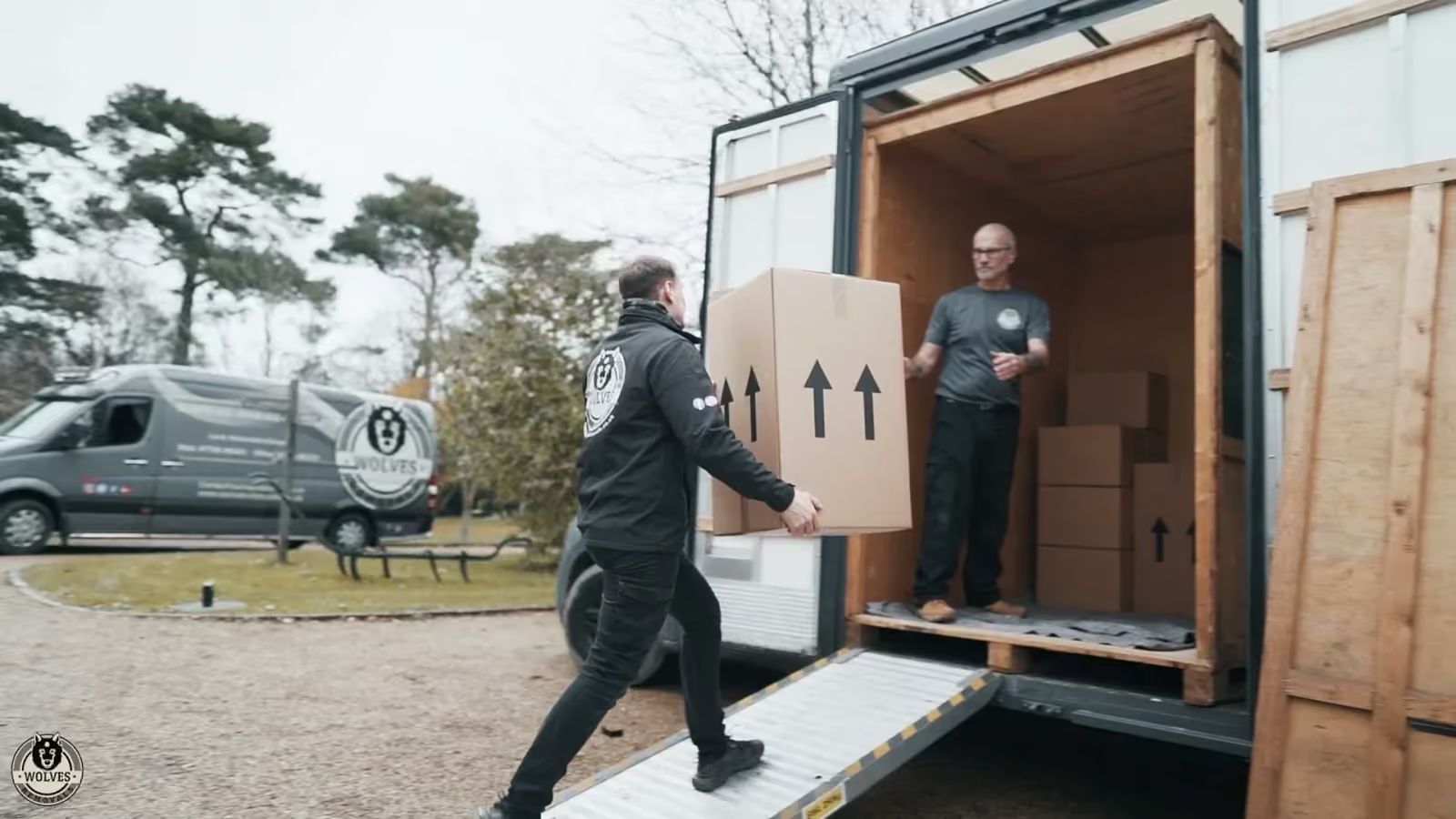
Managed container storage comes to you — we collect, wrap, seal, store and redeliver your belongings — while a self-storage unit is a space you rent and fill yourself. The right choice comes down to how much effort you want to spend, how protected your things need to be, and the true total cost.
For many West Sussex households the real question isn’t “which is cheaper?” but “who does the work, and who is responsible for my things?” Here is an honest, side-by-side look at the two models — including the times a self-storage unit still wins. Whichever you choose, the Self Storage Association UK advises checking a provider’s security, cleanliness and insurance first.
What is the difference between managed storage and self-storage?
The difference is who does the work and where your belongings live. With managed container storage, our team collects your items, loads and seals them into your own logged container, and keeps it in a managed warehouse — you never visit. With self-storage, you hire a unit, move everything yourself, and come and go as you please.
| Managed container (Wolves) | Self-storage unit | |
|---|---|---|
| How it works | We collect, wrap, seal & store | You rent a unit and fill it |
| Getting it there | Door to door — we do it | You hire a van and drive |
| Your space | A private, sealed container | A room you access yourself |
| Who lifts it | Our trained team | You (and any help you arrange) |
| Routine access | On request, we redeliver | Anytime, in opening hours |
| Best for | Hands-off, protected storage | Frequent self-access |
Which is more convenient?
Managed container storage is the more convenient choice for most people, because it removes the van, the driving and the heavy lifting entirely — we collect from your door across West Sussex and bring everything back when you need it. A self-storage unit is only more convenient if you genuinely need to reach your things yourself, often.
There’s no van to hire, no Saturday lost to lifting, and nothing to drive anywhere — it comes to you, and it goes back when you ask.The managed difference
Which keeps your belongings safer?
Managed container storage generally keeps belongings safer, because each item is packed and sealed into a logged container in an alarmed, monitored warehouse, and the managed handling can carry a higher legal duty of care than a self-storage unit, where goods are usually held at your own risk.
When a company collects your things and takes them into its keeping, that arrangement can amount to a bailment under UK law — a recognised duty to take reasonable care of them. A drive-up unit is normally just a licence to occupy space, with the contract placing the risk on you. We’re not solicitors, and what applies to you depends on the contract you actually sign — read it either way. The managed warehouse is also kept dry and ventilated, which guards against the damp and mould that quietly ruin things in a cold unit — see how a dry container protects furniture through a Sussex winter.
- Sealed, logged containers — your things are not loose in a shared space.
- Alarmed, monitored, staff-controlled warehouse rather than an unstaffed lock-up.
- A dry, ventilated environment that a cold metal unit can’t match.
- Insured throughout, with a higher duty of care than own-risk self-storage.
Which is cheaper?
Managed container storage often works out cheaper overall, because a self-storage unit’s lower headline rent usually has compulsory insurance, van hire, fuel and your own time added on top. Managed storage starts at £21 a week with collection and redelivery quoted upfront.
We compare the real, total-cost numbers — including the costs a unit hides — in our guide to how much storage really costs in West Sussex.
When does a self-storage unit still make sense?
A self-storage unit still makes sense when you need to reach your belongings yourself, frequently. If you are dipping into your things every week, the freedom of your own key and drive-up access can outweigh the convenience of a collected, managed container.
- Fast-moving stock you pick from weekly, or a project you visit constantly.
- A vehicle or trailer you want on a drive-up plot.
- You want the only key and the option to call in any time during opening hours.
If, on the other hand, you will rarely touch your things until you want them back, managed storage is almost always the better fit.
Managed or self-storage: which should you choose?
Choose managed container storage if you want your belongings collected, protected and out of the way with no effort, and self-storage if frequent self-access matters more to you than convenience, protection or total cost. For most West Sussex moves, downsizes and renovations, the managed model wins on all three.
More questions people ask before switching from self-storage
Do I have to pack everything myself first? Furniture is our job — we blanket-wrap and load it on the day. The loose small things, though, are far better boxed before we arrive: kitchen cupboards, books, wardrobes and anything that would otherwise travel as an armful.
How do you find my things again? Every container is sealed and logged against your name, so retrieving something is a warehouse job with a record behind it rather than a search. That is the practical difference between a private container and a shared open unit.
Can I add a container later if I underestimate? Yes — you add one from that week and move up the ladder, and the containers already sealed stay sealed. Nothing has to be repacked into a larger unit, which is the usual penalty for guessing wrong with self-storage.
What does it cost to compare properly? Weigh the whole picture: our weekly container rate plus our upfront collection and redelivery quote, against a unit’s rent plus compulsory insurance, van hire, fuel and two days of your own labour. The storage pricing page has the ladder, and the numbers behind the comparison are in our guide to storage costs in West Sussex.
A worked example: a two-bedroom house between completion dates
Take the most common reason people call us: a sale completes weeks before the new place is ready, and a whole house has to go somewhere. A two-bedroom home is normally a two-container job, so the storage sits at £42 a week for the space and the insurance, including VAT, with collection and redelivery quoted upfront from the volume and the distance and billed on top. Each container is 250 cu ft (5ft × 7ft × 8.6ft) — about a one-bedroom flat’s worth — and we count the containers when we see the load, not before.
Here is the same six weeks run through both models, stage by stage:
| Stage | Managed containers (Wolves) | Self-storage unit |
|---|---|---|
| Choosing a size | We confirm the container count on the day | You commit to a unit size before packing |
| Moving-out day | Our team wraps, loads and seals at your door | You book a van and load it yourself |
| The storage weeks | Sealed, logged, in an alarmed warehouse | A padlocked room you check on yourself |
| If the date slips | Extra weeks at the same weekly rate | Extra rent, and the van booked twice over |
| Moving-in day | We redeliver to the new address | A second hire van and a second load-out |
Sizing is where a self-storage unit quietly costs people money, because you have to guess a unit before you have finished packing — guess high and you rent air for six weeks, guess low and you are back on the phone mid-move. With containers you pay for the number you actually fill, and you can sanity-check the figure first with our storage size guide or on the container storage page. For a gap between homes like this one, short-term storage on weekly terms is usually the right shape; for a downsize, a probate clearance or a spell working abroad, long-term storage holds the same weekly price month after month.
How does access actually work in managed storage?
“Access on request” means your things come to you rather than you going to them. Give us 24 hours’ notice and we can open your container and retrieve a named item, or redeliver everything to a new address across West Sussex. What you cannot do is turn up unannounced and let yourself in: containers are stacked in a working, alarmed warehouse at Doryln House in Ashington, and bringing one down to floor level is a job for our team and their machinery, not something to do on a Sunday afternoon.
That single fact should decide the choice for most people. If your belongings are going away until you want them back, the notice period barely registers in practice. If you genuinely need to rummage weekly, a unit with your own key is the honest answer, even though it means the van, the driving and the lifting are yours.
It also changes how you should pack. Anything you might want early — paperwork, tools, a child’s cot, seasonal clothing — is worth flagging on collection day so it goes in last and comes out first. Everything else can be wrapped and buried at the back. Our guide to packing furniture for storage without wrecking it covers the wrapping side, including why airtight plastic is the one thing never to use.
Which model suits your situation?
Neither model is better in the abstract — the right one falls out of what you are storing and how often you need to touch it. This is how the common cases usually land:
| Your situation | Usually the better fit |
|---|---|
| A gap between completion dates or tenancies | Managed — collected, stored, redelivered |
| A renovation with the house half-emptied | Managed — nothing to drive anywhere |
| Downsizing, probate or working abroad | Managed — months at one weekly price |
| Furniture you want back in the same condition | Managed — blanket-wrapped and sealed |
| Archives, records or slow-moving stock | Managed — see business storage |
| Stock you pick from every week | Self-storage — you need your own key |
| A car, caravan, motorbike or boat | A drive-up plot — we do not store vehicles |
If your load is furniture rather than a whole house, furniture storage works the same collected way on a part-load. Our vans reach doors right across West Sussex — check whether yours is covered on areas we cover, or read the storage in Worthing page to see a managed collection described end to end.
Frequently Asked Questions — Managed container storage vs a self-storage unit
The questions West Sussex customers ask us most.
For most people storing without frequent access, yes — it is collected, protected and often cheaper once the full cost is added up. Self-storage suits those who need regular self-access to their unit.
Managed storage gives you your own sealed, logged container — not a shared open unit — so your belongings never share space with anyone else’s.
Yes — on request. We redeliver to your door across West Sussex, so you do not need to travel to a unit yourself.
Generally, yes. Sealed, logged containers sit in an alarmed, monitored warehouse, and managed handling can carry a higher legal duty of care than own-risk self-storage.
Still have a question? Talk to the family team

Store Without Lifting a Finger — Managed container storage vs a self-storage unit
Storage from just £21 a week with no deposit — collection and redelivery quoted separately, upfront. Free, no-obligation quote within 24 hours.
We’re Trusted By