
Storage for Downsizing, Probate & Clearing a Home
A calm, practical guide to storing belongings during a downsize or bereavement — collected from the door, so you never have to lift a thing.
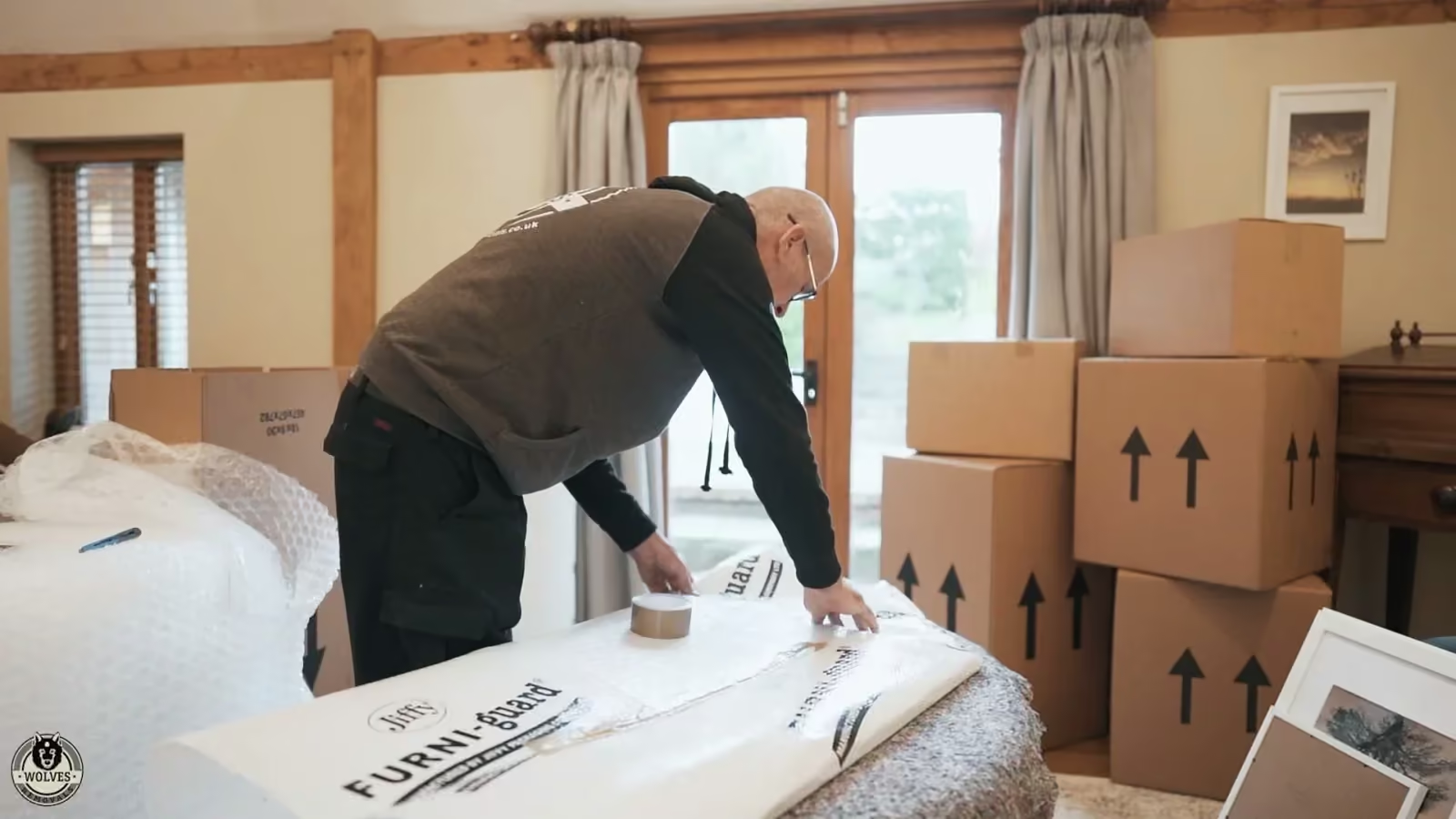
Storage gives you time and space when you’re downsizing, sorting a probate estate, or clearing a family home — we collect everything from the door, store it safely, and you decide what to keep, sell or pass on at your own pace, with nothing to rush.
Downsizing and clearing a home are rarely just practical jobs. They come with deadlines, emotions and far more belongings than a new place can hold. Collected storage takes the lifting and the time pressure off, so you can make calm decisions rather than rushed ones.
How does storage help when you’re downsizing?
Storage helps when you’re downsizing by holding the belongings that don’t fit the new home while you decide what to do with them. Instead of rushing every choice on moving day, you move what you need, store the rest, and sort it room by room when you have the headspace.
The hardest part of downsizing isn’t the moving — it’s deciding. Storage buys you the time to decide well.Why storage makes downsizing easier
Storage for probate and clearing a family home
When you are clearing a family home or dealing with a probate estate, storage gives executors and relatives breathing room. Belongings can be collected and kept safe while probate is granted and the estate is settled, items are shared between family, and decisions are made — without a property having to be emptied to a deadline.
- Empty the property without losing anything — everything is logged and stored, not skipped in haste.
- Give the family time to decide who keeps what, even at a distance.
- Hold items safely until they can be valued, sold or passed on.
How do you decide what to keep?
Decide what to keep by sorting belongings into simple groups — keep, pass on, sell, and not sure — and let storage hold the “not sure” pile rather than forcing a snap decision. The things that matter become clearer with a little time and distance.
- Keep what you have room and love for in the new home.
- Pass on or sell what others would value more than a storage shelf.
- Store the “not sure” pile and revisit it without pressure.
How long can you store while you decide?
You can store for as long as you need while you decide — there is no fixed end date. Downsizing and probate decisions take time, and flexible weekly terms mean the “not sure” pile can sit safely for weeks or months while you, or the family, work through it at a pace that feels right.
How many containers does a downsize need, and what does it cost?
Most downsizes need fewer containers than people expect, because you are only storing the overflow rather than the whole house. Each wooden container holds 250 cu ft — roughly 5ft × 7ft × 8.6ft, about the contents of a one-bedroom flat — so the count comes from whatever is left once the new home has been filled.
| What is going into storage | Usual container count |
|---|---|
| Boxes, paperwork and a couple of pieces of furniture | Part of one container |
| The overflow from a three-bed house moving into a two-bed bungalow | One, sometimes two |
| A whole three-bedroom house held while the family decides | Around three |
| A four-bedroom family home cleared in full | Four or more |
Those rows are a steer rather than a quote — the crew settles the real number as they load, and you are billed for the containers actually filled, not a figure guessed in advance. Our storage size guide runs the same maths room by room if you want to sanity-check it before you ring.
A worked example: a three-bed house into a two-bed bungalow
Picture a family home being sold and the move going into a two-bedroom bungalow. The bungalow absorbs the beds, the sofa, the everyday kitchen and about half the wardrobe space. What it will not take is the dining suite, a spare bedroom’s worth of furniture, the loft, the garage shelving and a dozen boxes of paperwork and photographs nobody can face opening yet. That is comfortably one container, and it often tips into a second once the garage and loft are emptied properly rather than picked at.
One container is £21 a week covering storage and insurance, with collection and redelivery quoted upfront as a separate charge based on volume and distance. Two containers cost £42 a week, three £63 and four £79, all on those same terms — the weekly figure covers the storage, and the collection quote is given before you commit. There is no deposit and no minimum term, so once the “not sure” pile has shrunk enough to release a container, you stop paying for it. The full breakdown sits on our pricing page, and how the service itself works is set out under container storage.
What about the things nobody wants to keep?
The things nobody wants don’t have to be decided on clearance day. Storage holds them while you arrange to sell, donate or pass them on — to family, a charity, an auction house or a house-clearance specialist — rather than sending anything to a skip in a rushed afternoon you might regret.
What to sort out before collection day
A probate clearance runs far more smoothly when a handful of things are agreed before the van arrives. None of it is complicated, but all of it is much harder to do retrospectively once forty boxes are sealed and sitting in a warehouse.
- Agree one point of contact — usually the executor. Tell us who that is when you book, so requests to release or redeliver items come from one person and nobody is left second-guessing the rest of the family.
- Photograph every room before it is packed. A few phone photos of each room, and close-ups of anything valuable, make the cheapest record you will ever take of what was actually in the house.
- Label by person, not only by room. If a sibling is having the dresser, mark it at the point of packing rather than trying to reconstruct the conversation six months later.
- Take out anything that cannot be stored. Paint, gas bottles, petrol and other flammables have to stay behind — our guide to what you can’t put in storage has the full list. We also do not store vehicles, so a car, caravan or motorbike in an estate needs its own arrangements.
- Keep the paperwork separate. Deeds, certificates, letters and photographs are among the easiest things to lose in a clearance; box them properly and keep them together, as our guide to storing family photos and keepsakes explains.
Older furniture is worth flagging before collection rather than after. Removal blankets and padding come with the crew, who wrap and load your furniture for you — boxing up the smaller items is down to you, or our packing team can do it as a paid extra quoted upfront — and we are a LAPADA member, so if a bureau, a longcase clock or a run of period dining chairs is coming out of the house, say so when you book and it gets wrapped individually. How pieces are protected once they are inside is covered on our furniture storage page.
A calmer way to downsize
The calmest way to downsize is to take it in stages rather than all at once:
- Move what you know you want into the new home first.
- Collect the rest into storage, so the old property can be handed over on time.
- Sort one box or category at a time — keep, pass on, or let go.
- Release items from storage as decisions are made, with no deadline.
How a family clearance usually runs
In practice the sequence is more predictable than it feels from the inside. The family walks the house and agrees the obvious keeps and the obvious lets-go; boxes are packed over a weekend or two and labelled by person; then we arrive on the agreed date, wrap and load the furniture, build and seal your containers on the doorstep, and drive them back to the alarmed, CCTV-monitored warehouse at Ashington. The property is left clear on the day, so it can be handed over, cleaned or put on the market on time.
From there it slows down deliberately. Over the following weeks items come out as decisions are made — a wardrobe redelivered to one sibling, a box of photographs to another, a few pieces released to an auction house — each on 24 hours’ notice, because containers are held in our warehouse rather than a drive-up unit you visit. Once enough has gone that a container is empty, it comes off the bill. Nothing has to be settled in a single afternoon, which is the entire point. If you would rather see the mechanics first, how it works sets out collection, storage and redelivery step by step, areas we cover confirms whether we reach the property, and if the house is on the coast our page on storage in Worthing shows what a local collection looks like.
More questions about downsizing and probate storage
Can the executor be the only point of contact for the account?
Tell us who is dealing with the estate when you book and that person becomes the point of contact, so instructions to release or redeliver come from one place. It saves a great deal of confusion when relatives live in different parts of the country and only one of them was at the house on collection day.
Can two relatives share one container?
A container is billed as one container however many people’s belongings are inside it, so a family can share one. Label clearly by person at packing and items can be released to each of them separately as decisions are made.
What if the estate takes a year to settle?
Nothing changes. Storage runs on flexible weekly terms with no fixed end date, so an estate that takes months simply carries on at the same weekly rate for storage and insurance, with collection and redelivery still quoted separately whenever items actually move. For what a longer stay involves, see long-term storage; if you only need cover for a few weeks while a house sale completes, short-term storage is the same service over a shorter window.
Are there things from a house clearance you cannot take?
The rules are the same as for any move: no vehicles, nothing flammable or hazardous, no food or perishables, and nothing living. Everything else that would normally furnish a house — furniture, boxes, pictures, tools, garden furniture, the contents of an emptied garage — is exactly what these containers are built for.
Frequently Asked Questions — Storage for downsizing, probate & clearing a home
The questions West Sussex customers ask us most.
Yes. We collect what doesn’t fit the new home, store it on flexible weekly terms, and you decide what to keep, sell or pass on at your own pace — with no deadline to empty a room by.
Yes. Belongings can be collected and kept safe while a probate estate is settled and the family decides who keeps what, so the property can be emptied without anything being lost or rushed.
As long as you need — weekly and 4-week terms mean there is no fixed end date, which suits downsizing and probate where decisions take time.
Yes. We collect everything from the door across West Sussex and redeliver or release items when you are ready, so there is no heavy lifting for you.
Still have a question? Talk to the family team

Store Without Lifting a Finger — Storage for downsizing, probate & clearing a home
Storage from just £21 a week with no deposit — collection and redelivery quoted separately, upfront. Free, no-obligation quote within 24 hours.
We’re Trusted By