
Business Storage in West Sussex: Stock, Archives & Trades
Free up floor space without renting a warehouse — collected, sealed container storage for West Sussex businesses, online sellers and tradespeople.
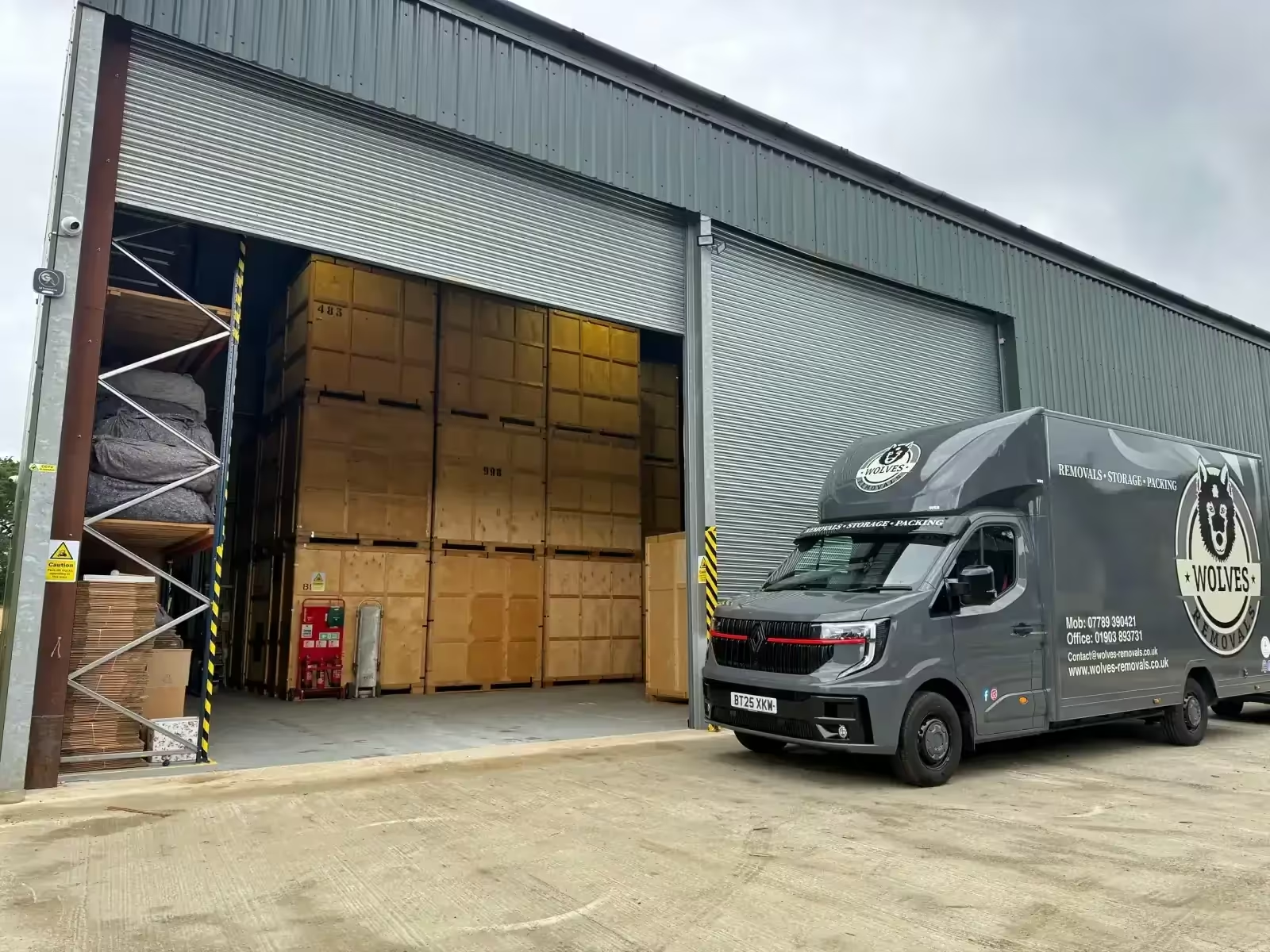
Business storage frees up expensive floor space without a long warehouse lease — we collect, store and redeliver stock, archives and equipment for West Sussex businesses, on flexible weekly terms, with everything logged and insured.
Whether you’re an online seller drowning in stock, a tradesperson short of van space, or an office that has to keep years of records, renting a warehouse is overkill. Collected container storage gives you the space when you need it and takes it away when you don’t.
What can businesses store?
Businesses can store stock and packaging, archives and records, tools and equipment, office furniture during a move, and any seasonal overflow that doesn’t fit right now. If it isn’t hazardous and you don’t need it to hand every day, it can go into a managed container.
| What businesses store | Examples |
|---|---|
| Stock & packaging | Online-seller inventory, seasonal lines |
| Archives & records | Files and paperwork you have to keep |
| Tools & equipment | Trade kit and machinery between jobs |
| Office furniture | Desks and chairs during a move or refit |
| Overflow & seasonal | Whatever won’t fit your space today |
Why use managed storage for business goods?
Managed storage suits business goods because each container is collected, sealed, logged and insured, and you scale the space up or down without committing to a lease. The managed model can also carry a higher duty of care than a self-access unit, which matters for stock and records.
A warehouse lease is a fixed cost you carry all year — collected container storage is space you only pay for while you need it.Storage that flexes with the business
For how the collected model compares with a self-access unit, see managed container storage vs a self-storage unit.
How much does business storage cost?
Business storage costs from £21 a week per container, with no deposit and collection quoted upfront — and unlike a warehouse there is no lease, no business rates, no fit-out and no fixed term. You add containers when stock builds up and release them when it clears, so you only pay for the space you are actually using.
For the full picture of what storage costs and how it compares, see how much storage really costs in West Sussex.
How do you access business stock in storage?
You access business stock by requesting it: we retrieve your container or specific items and redeliver to your premises, usually on 24 hours’ notice. Collected storage suits stock, archives and equipment you use periodically rather than pick from hourly — for daily, hands-on access, a self-access unit may suit better.
Which West Sussex businesses use storage?
All sorts of West Sussex businesses use collected storage to free up space without committing to a unit or a warehouse:
- Online sellers holding stock, packaging and seasonal lines between order peaks.
- Tradespeople keeping tools, materials and machinery safe between jobs.
- Offices storing archives, records and furniture during a move or refit.
- Event, retail and seasonal businesses whose stock peaks and dips through the year.
How long should you keep business records?
UK companies must keep their accounting records for at least six years (gov.uk), and often keep other statutory records longer. That makes dry, logged container storage a tidy home for archive boxes you rarely open but legally can’t throw away — off-site, but retrievable on request.
How many containers does a business actually need?
Each container holds 250 cubic feet — 5ft wide, 7ft deep and 8.6ft tall — which is about the contents of a one-bedroom flat. As a rough guide only, that translates fairly predictably into business terms. One container will usually take a small office’s worth of archive boxes with a desk and chairs on top, or roughly the same volume as a couple of pallets of boxed stock, or a trade van’s full load of tools, materials and site kit. Two containers tend to cover a modest online seller’s peak-season inventory, or the contents of an office being refitted. The crew confirms the real count once they are in the building and loading, so if you would rather check your own list than guess at it, our storage size guide works through it item by item, and the container storage page shows what a sealed container actually looks like before it is loaded.
What business storage costs, container by container
The rate is charged per container per week. Every figure below covers storage and insurance only — collection from your premises and redelivery back to you are a separate charge, quoted upfront once we know the volume and the distance.
| Containers | Space | Typical business load | Weekly rate |
|---|---|---|---|
| 1 | 250 cu ft | Archive boxes, a desk and chairs, or a van’s worth of trade kit | £21 a week for storage and insurance, with collection and redelivery quoted separately upfront |
| 2 | 500 cu ft | Peak-season stock for a small online seller, or an office refit | £42 a week covering storage and insurance, plus a separate collection and redelivery charge quoted upfront |
| 3 | 750 cu ft | A stockroom cleared out, or several years of records plus furniture | £63 a week for storage and insurance, with collection and redelivery charged separately and quoted upfront |
| 4 | 1,000 cu ft | A small premises emptied during a move or refurbishment | £79 a week covering storage and insurance, with collection and redelivery quoted upfront as a separate charge |
Larger requirements are quoted individually, and the current rates sit on our pricing page.
A worked example: an online seller before and after Christmas
Picture a home-based online seller whose spare room and hallway are both stacked with boxed stock from September onwards. Two containers — 500 cubic feet between them — take the overflow and give the rooms back. That is £42 a week for storage and insurance on the two containers, with collection from the door and redelivery afterwards quoted upfront as a separate charge worked out from the volume and the distance to our Ashington warehouse.
Stock comes back in batches as it sells. When the January lull arrives and one container is released, the cost steps back down to £21 a week for storage and insurance, again with any redelivery quoted separately upfront. Nothing has been signed for a year, and nothing sits half-empty in February still being paid for. That flexibility, rather than the headline rate, is usually the real argument for containers over four walls.
Container storage or a small warehouse unit?
Both have their place, and the deciding question is honestly quite simple: how often do you need your hands on the goods? If you are picking orders daily, a unit you can walk into wins. If you are holding stock, records or equipment that moves in and out in batches, containers are usually the lighter commitment.
| Collected container storage | Renting a warehouse unit | |
|---|---|---|
| Commitment | Flexible weekly terms, no deposit | A lease, usually measured in years |
| Business rates | None payable by you | Normally payable on the unit |
| Fit-out & utilities | Nothing to fit out, light or heat | Racking, lighting, power and heating are yours |
| Scaling | Add or release containers as stock rises and falls | A fixed footprint, full or empty |
| Security | Sealed containers in an alarmed warehouse with 24/7 CCTV | Whatever you install and pay for |
| Insurance | Included in the weekly rate, with collection and redelivery quoted separately upfront | Arranged and paid for by you |
| Getting goods in and out | We collect and redeliver, on 24 hours’ notice | Your own van, driver and time |
| Best suited to | Stock, archives and equipment used in batches | Daily picking, packing and trade counters |
Our how it works page walks through collection, storage and redelivery in order if you want to see the practical side before committing to anything.
How to pack a business container so retrieval isn’t a lottery
The thing that separates painless business storage from a frustrating one is what happens in the hour before collection. A container packed thoughtfully hands you the box you asked for the next day. One packed in a rush turns every retrieval into an excavation.
- Number the boxes and keep the list — a simple spreadsheet of box numbers against contents, held on your side, is worth more than any label. Asking for “box 14” is a quick job; asking for “the blue folder” is not.
- Put anything you might want back near the doors — seasonal lines you will pull in six weeks should not be sitting behind archive boxes you will not open for six years.
- Use uniform cartons for stock — same-sized boxes stack square and use the full 8.6ft of height. Mismatched boxes waste far more space than most businesses expect.
- Keep the weight low — heavy stock and full archive boxes at the bottom, light and fragile items on top. Paper is a great deal heavier by the box than it looks.
- Check what you legally cannot store — aerosols, paints, fuels and gas bottles are out, which catches trades and some online sellers by surprise. Our guide to what you cannot put in storage lists the categories.
- Hold back what must not travel — original certificates, company seals and anything you would struggle to replace belong in the office, not in a container.
Questions West Sussex businesses ask before booking
Can we get one box back without emptying the container?
Yes, though it is arranged rather than self-served. Tell us what you need and we bring the container out and redeliver the items to your premises, normally on 24 hours’ notice. There is no drive-up self-access, which is the trade-off for goods being sealed and kept inside a secured warehouse rather than behind a row of roller doors — and it is exactly why a numbered box list is worth the ten minutes it takes to write.
What happens if stock builds up faster than expected?
You add a container. Because the terms are weekly rather than contractual, an extra container can be collected and added without renegotiating anything, then released again the week the stock clears. Businesses with a seasonal shape, from event hire to the garden trade, tend to move up and down that ladder two or three times a year.
Is short-term business storage worth it for a single project?
Often, yes. An office refit, a shop refurbishment or a move between premises usually needs space for weeks rather than years, and short-term storage is built for that shape of job. For archives and records you are legally obliged to keep, long-term storage is the better fit — the same containers in the same warehouse, just a longer stay.
Do you collect from our part of West Sussex?
We collect across West Sussex from our warehouse at Doryln House, London Road, Ashington, Pulborough — including businesses in Horsham, Worthing and the towns between them. The areas we cover page lists them, and distance is one of the two things that sets your collection and redelivery charge, alongside volume.
Are office desks and chairs treated differently to stock?
They are, because wrapping a boardroom table is a different job to stacking cartons. Office furniture is blanket-wrapped and protected in the same way as household pieces — our furniture storage service covers how desks, chairs, cabinets and tables are prepared before they go into the container during a move or a refit.
Frequently Asked Questions — Business storage: stock, archives & trades
The questions West Sussex customers ask us most.
Stock and packaging, archives and records, tools and equipment, office furniture during a move, and any seasonal overflow — anything that is not hazardous and you do not need to hand every day.
Usually, because you only pay for the container space you use, on flexible weekly terms, with no long lease, business rates or fit-out — and collection and redelivery are quoted upfront.
Yes. Dry, logged container storage suits archive boxes you rarely open but must keep — most UK businesses keep accounting records for at least six years — and we retrieve them on request.
Yes. We collect from businesses across West Sussex, store everything in a dry, alarmed warehouse, and redeliver when you need it.
Still have a question? Talk to the family team
Store Without Lifting a Finger — Business storage: stock, archives & trades
Storage from just £21 a week with no deposit — collection and redelivery quoted separately, upfront. Free, no-obligation quote within 24 hours.
We’re Trusted By