Moving to Crawley: A Local Guide
Crawley was drawn on a plan in 1947, not grown around a market square — and that shapes almost everything about living here, from its self-contained neighbourhoods to one of the quickest train runs into London in the area. Here’s what each pocket of RH10–RH11 is actually like, and the groundwork a move throws up that estate agents don’t cover.
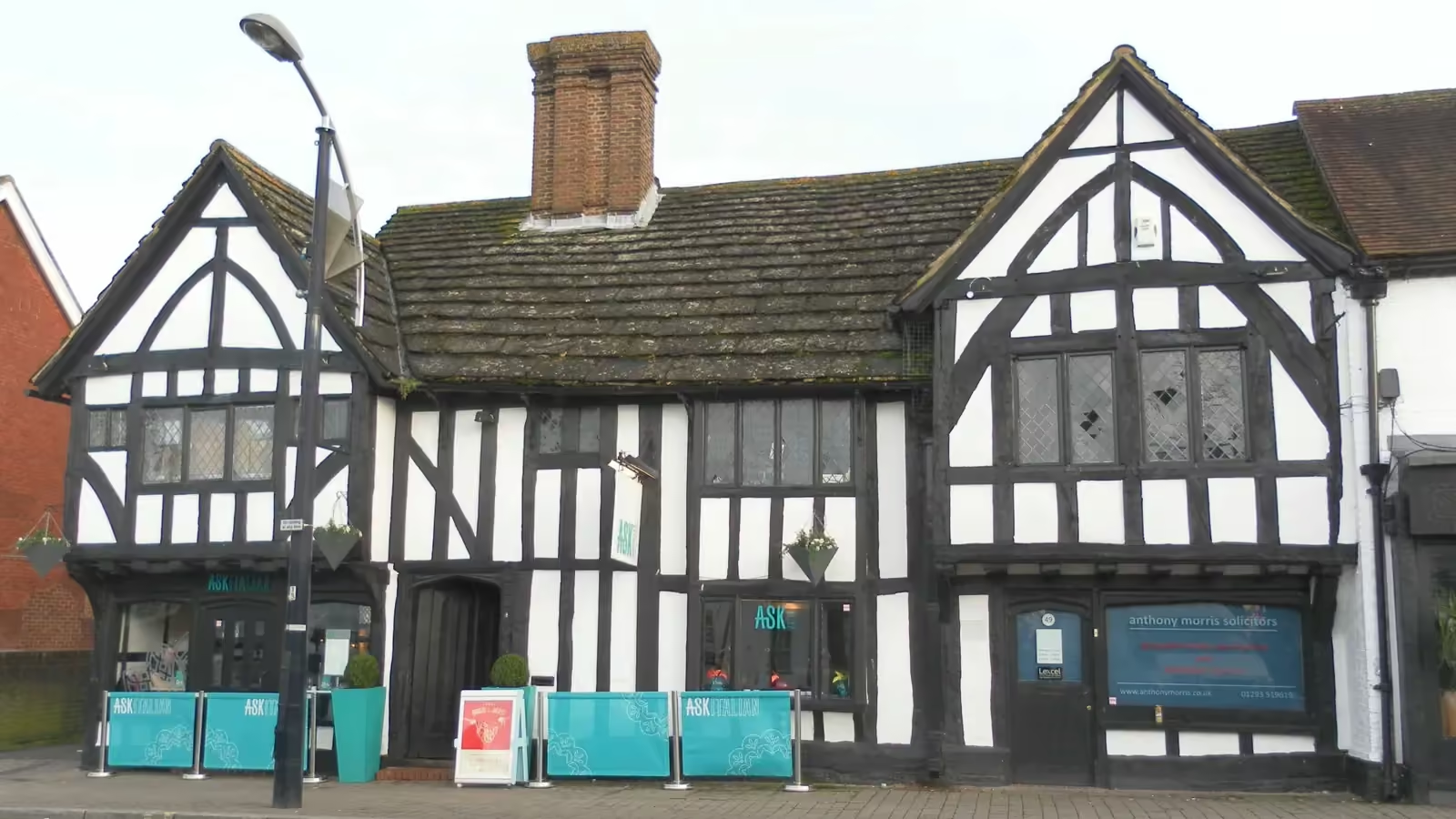
Crawley was drawn on a plan in 1947, not grown organically around a market square — and that single fact shapes almost everything about living here. The town was built outward from a small existing village as a string of self-contained neighbourhoods, Gatwick sits close enough to be one of the region’s biggest employers, and the trains out of Three Bridges run faster into London than any other town in this guide series. RH10 and RH11 cover a wider range of streets than ‘New Town’ suggests, and this guide sets out what each neighbourhood is actually like, plus the groundwork a move here throws up that estate agents leave off the listing.
Crawley sits in the far north-east corner of West Sussex, a few miles south of Gatwick Airport and around 30 miles from central London, with a population of 118,493 at the 2021 census, rising toward 124,000 on more recent estimates. Rather than growing around a historic centre, it was designated a New Town on 9 January 1947 and built out from a village of fewer than 10,000 people; the original masterplan arranged homes into neighbourhoods radiating from a purpose-built town centre, each meant to have its own shops, church, pub, school and community hall within walking distance, so daily life rarely needed to leave the neighbourhood at all (Wikipedia). What started as nine planned neighbourhoods has grown to fourteen over the decades, the newest being Forge Wood on the eastern fringe.
The neighbourhoods of Crawley, mapped
Grouped into the pockets that matter for a move, here is what each corner of Crawley is actually like — and what the commute and Gatwick’s flight paths mean for each one, in general terms rather than street-by-street guesswork.
| Neighbourhood | Typical homes | Who it suits | Commute & Gatwick noise notes |
|---|---|---|---|
| Three Bridges | Victorian terraces and villas around the original railway hamlet, plus newer flats built up around the station forecourt | Commuters who want to step onto a fast London train within a few minutes’ walk | The quickest way out of the borough by rail; check Gatwick’s noise and airspace pages for how flight paths affect a specific street, since they vary and shift over time rather than following a fixed line |
| Pound Hill & Maidenbower | 1970s–80s estate housing in Pound Hill; a purpose-built 1990s–2000s neighbourhood in Maidenbower with its own lake and shopping parade | Families wanting modern layouts, driveways and schools within the neighbourhood itself | A short bus ride or drive to Three Bridges station; sitting closer to the M23 and the airport boundary than the western neighbourhoods, so it is worth checking a specific address on Gatwick’s own tools rather than assuming from the postcode |
| Furnace Green & Tilgate | 1950s–60s semis and terraces around Furnace Green’s original parade, with larger houses in Tilgate backing onto the park | Families wanting to be within walking distance of Tilgate Park’s lake and woodland | A bus or short drive to Three Bridges or the town centre for trains; tree cover doesn’t block aircraft noise, so check the specific street rather than the neighbourhood’s general reputation |
| Northgate & Southgate | Original 1950s neighbourhood housing and flats within easy reach of Crawley station and the town centre | Buyers and renters who want to walk to the mainline station, County Mall and the shops | The shortest walk to Crawley station of any neighbourhood here; town-centre traffic and footfall tend to be the bigger day-to-day noise than aircraft in this pocket |
| West Green & Langley Green | Some of the earliest New Town neighbourhoods — 1950s terraces and semis around their own shopping parades, with mature trees and gardens | Buyers wanting an established, walkable neighbourhood rather than a newer estate | A bus or short drive to Crawley or Ifield stations; check noise for the actual street via the tools below rather than relying on the neighbourhood’s general reputation |
| Ifield & Gossops Green | Ifield’s historic village core around the church and mill pond, alongside 1950s–60s estate housing; Gossops Green’s own 1960s neighbourhood centre further south | Buyers wanting a village feel (Ifield) or straightforward 1960s family housing (Gossops Green) without leaving the town | Ifield has its own station on the Arun Valley line into Horsham; Gossops Green relies on bus routes into the centre |
| Bewbush & Broadfield | 1970s–80s estate housing — around a third of homes in Bewbush remain social or housing-association owned, and Broadfield mixes private, council and self-build properties | Buyers and renters after the most affordable entry point into Crawley, including first-time buyers | The furthest of these neighbourhoods from Three Bridges and the mainline, relying on buses or a drive into the centre; both have had recent regeneration — Bewbush’s community hub was rebuilt after 2009, and Broadfield is home to Crawley Town FC’s stadium and the independently run Barton shopping parade |
What actually decides day-to-day life in Crawley
Three things do most of the work in whether Crawley suits you: how fast the trains actually are, what Gatwick means for the local job market, and how far your money stretches against the other big West Sussex towns.
Crawley’s own green space is Tilgate Park, a former country estate handed to the town not long after it was designated a New Town, with a lake, nature centre and golf course a short walk from Furnace Green and Tilgate itself. County Mall and the town centre around it carry most of the everyday shopping the neighbourhood parades were never meant to handle alone, and K2 Crawley, the borough’s leisure centre, sits just off the ring road with pools, a climbing wall and a skate park. None of it reads like a historic market town, because it was never meant to — it is a town designed in one go around cars, buses and a railway station, and that design still shapes how people get around it today.
Trains run frequently from both Crawley and Three Bridges stations on the Brighton Main Line and connecting services: around 54 minutes to London Victoria on a typical service from Crawley (from about 43 minutes at the fastest), and around 47 minutes to London Bridge on a typical service from Three Bridges (from about 34 minutes at the fastest — Trainline). The M23 connects the town to the M25 and Brighton, though it and the local Fastway bus network both slow noticeably at peak times, particularly around the airport junctions.
On price, Rightmove’s recent sold-price data puts the average Crawley home at around £356,800 over the past year — flats average around £206,600, terraced houses around £341,500, and semi-detached houses around £404,500. Schools sit within each neighbourhood rather than being concentrated in one part of town; confirm current catchment and admissions detail for a specific street with West Sussex County Council before you commit.
Crawley vs Horley
The two towns sit either side of Gatwick and get lumped together constantly, but they are not the same size of place, and they do not win on the same things.
| Metric | Crawley | Horley |
|---|---|---|
| Average house price | Around £356,800 | Around £429,100 |
| Fastest train to London Victoria | 43 minutes (about 54 typical) | 31 minutes (about 47 typical) |
| Character | Purpose-built New Town in West Sussex, two stations, fourteen neighbourhoods and its own town centre | Smaller Surrey commuter town on Gatwick’s north side, one station, built up as a dormitory town for London |
Horley wins on raw speed into Victoria — its trains are consistently quicker than Crawley’s, and the town sits close enough to the airport’s North Terminal that some residents walk to check-in. What it doesn’t have is Crawley’s scale: a population roughly a fifth the size, a single station rather than two, and a compact centre built around commuting rather than a full town in its own right. If the train time is what matters most, Horley has the edge; if you want more streets to choose from, a lower asking price, and a town that functions on its own rather than around a station, Crawley is the better fit.
Where a Crawley move gets complicated
The town average tells you almost nothing about a specific neighbourhood. Fourteen self-contained neighbourhoods were built to different plans in different decades, and they vary in stock, price and character far more than the ‘Crawley’ label suggests — picking the right one matters more here than in a town with a single centre and a ring of suburbs.
Check the actual street for noise, not the town’s reputation. Flight paths change with the runway in use, the time of day and over the years, so no single neighbourhood can honestly be labelled ‘quiet’ or ‘noisy’ as a blanket rule. Before you commit to an address, look up how it’s actually affected via Gatwick’s noise and airspace pages and Crawley Borough Council’s environmental health team, rather than going on what people say about the town in general.
Shift work changes what a ‘normal’ moving day looks like. With thousands of local households working airport rosters, a fair number of Crawley moves need to happen around early starts, late finishes or days off that fall midweek — if that’s you, agree a collection or delivery window that actually fits your pattern rather than assuming a standard nine-to-five slot will work.
Two rail lines and one motorway junction get busy at the same times every day. The Brighton Main Line and the Arun Valley line both run through the borough, Fastway buses link the neighbourhoods to the centre, and the M23 junctions nearest the airport slow down at peak times and around school runs — worth building into a moving-day timing rather than discovering on the day.
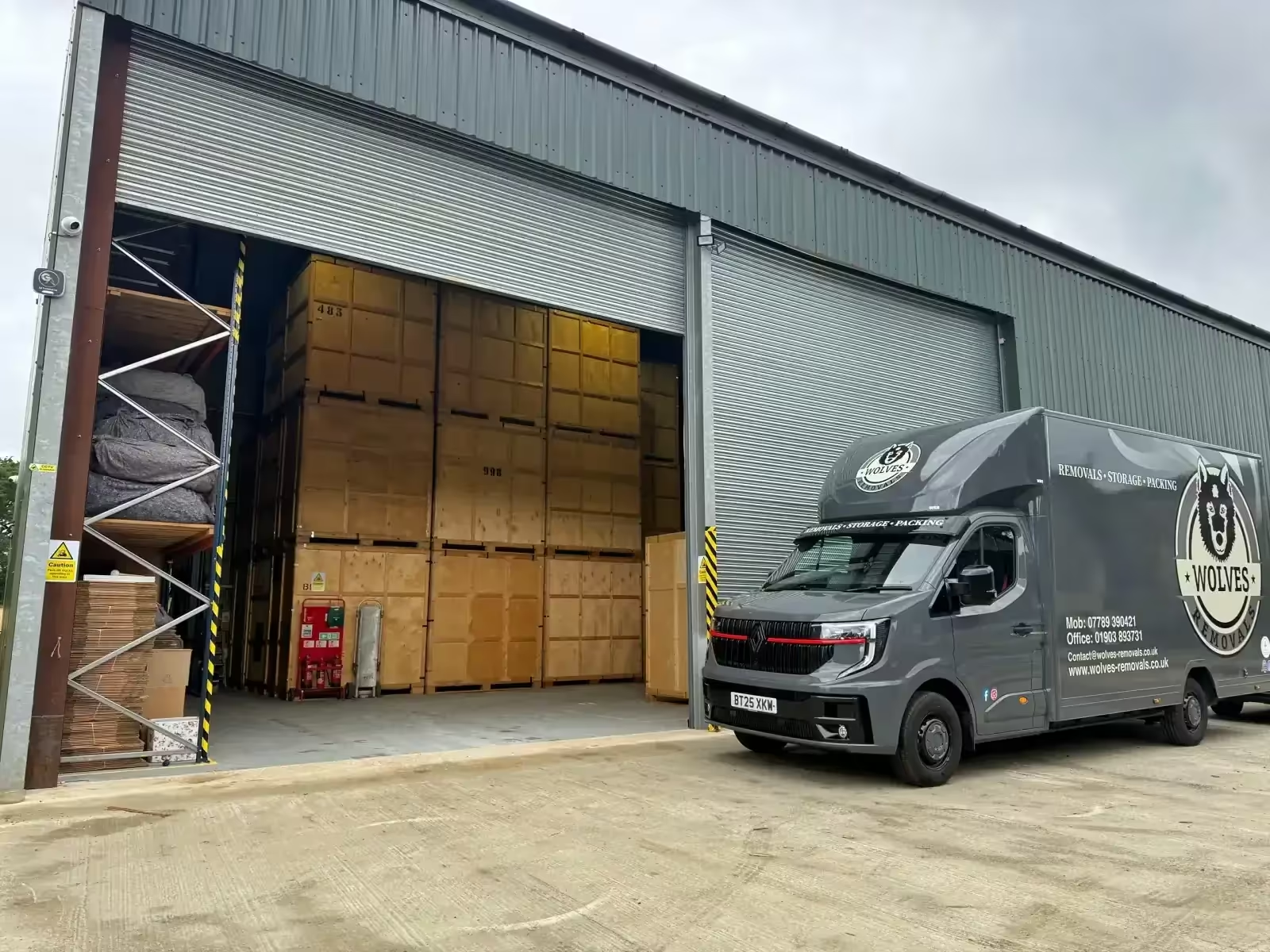
And the same chain-timing problem that affects every town in this county. Crawley’s resale market moves quickly, and it is common enough to complete on one property before the next is ready, or for a sale to fall through with the move already booked. A managed storage service in Crawley can collect from the old address and hold everything safely until the new one is ready, which also suits anyone posted abroad through Gatwick and needing somewhere for their belongings to sit while they’re away.
Your Crawley move-week checklist
The admin that is easiest to lose track of mid-move, gathered in one place:
- Tell the council you’re moving — report your change of address for council tax via Crawley Borough Council’s change of address service, and register separately for the electoral roll.
- Check the noise picture for your actual street via Gatwick’s noise and airspace pages and the council’s environmental health team, before you exchange rather than after.
- Redirect your post with Royal Mail, and update your address with your bank, DVLA, GP and any subscriptions.
- Take meter readings at both properties and get your new utility accounts set up.
- Apply for school places in good time via West Sussex County Council’s school places page if you’re moving with children.
- Flag it early if you work shifts — agree a collection or delivery window that fits a roster pattern rather than assuming a standard weekday slot will work.
Frequently Asked Questions — Moving to Crawley: A Local Guide
The questions West Sussex customers ask us most.
It depends what you want. As a planned New Town rather than an organic market town, Crawley trades period charm for practical living — its own neighbourhoods, a large shopping centre, and fast trains to London and Gatwick on the doorstep for work. People chasing a walkable historic centre tend to look elsewhere; people who want space, affordability and speed into London tend to rate it highly.
For some streets, yes, and for others barely at all — flight paths vary by neighbourhood, by which runway is in use and by time of day, and they do change over the years, so a blanket reputation for the whole town isn't reliable. Before committing to an address, check Gatwick's own noise and airspace pages and Crawley Borough Council's environmental health team for how a specific street is affected, rather than going on what people say about 'Crawley' in general.
It genuinely depends what you need — Three Bridges and Northgate suit commuters wanting a short walk to a fast train, Maidenbower and Pound Hill suit families after modern estate housing, and Ifield keeps a village feel most of the town lost in 1947. There isn't one 'best' neighbourhood, because Crawley was built as fourteen separate ones, each aimed at a slightly different household.
Yes — of the larger West Sussex towns, it's the most affordable to buy into. Rightmove's recent sold-price data puts the Crawley average at around £356,800, against roughly £382,000 in Worthing, £434,000 in Horsham and £439,800 in Chichester.
Quick, by Sussex standards. Trains from Crawley station reach London Victoria in around 54 minutes on a typical service (43 at the fastest), and Three Bridges — the busier interchange station a mile or so east — reaches London Bridge in about 47 minutes typically, or 34 at the fastest; both are the shortest London runs of any town in this guide series.
Maidenbower and Pound Hill are the usual picks — modern estate housing, their own primary schools, and Maidenbower's lake and shopping parade within the neighbourhood itself. Furnace Green and Tilgate suit families who'd rather back onto Tilgate Park than a purpose-built centre.
Still have a question? Talk to the family team
Store Without Lifting a Finger — Moving to Crawley: A Local Guide
Storage from just £21 a week with no deposit — collection and redelivery quoted separately, upfront. Free, no-obligation quote within 24 hours.
We’re Trusted By