
Moving to Chichester: A Local Guide
Chichester runs on a different rhythm to the rest of West Sussex — a working cathedral inside Roman-and-medieval walls, a harbour full of sailing boats down the road, and the South Downs where the city stops. Here’s what PO19’s different pockets are actually like to live in, and the groundwork estate agents leave out.
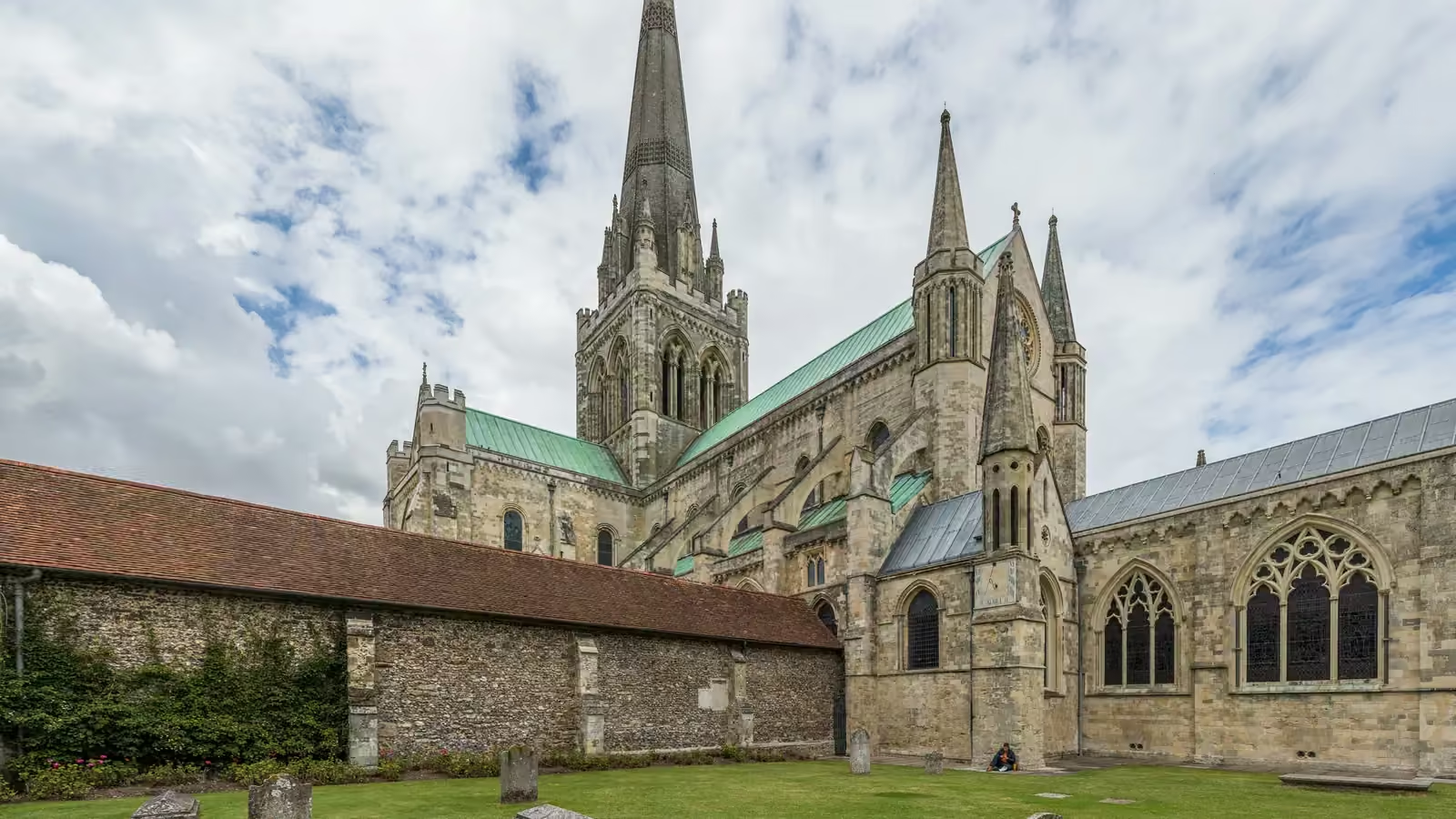
Photo: David Iliff (Diliff) / CC BY-SA 3.0
Chichester runs on a different rhythm to the rest of West Sussex: a working cathedral inside Roman-and-medieval walls, a harbour full of sailing boats a few minutes’ drive away, and the South Downs rising where the city stops. It’s slower to reach London than Horsham or Crawley, and PO19’s different pockets suit quite different households — this is what each one is actually like, plus the groundwork estate agents leave out.
Chichester is West Sussex’s only city, built around a cathedral and still traced by the walls first raised by the Romans and rebuilt through the medieval period. Around 29,000 people live within the city boundary itself (2021 census), with several times that in the villages, harbourside hamlets and market towns that surround it. The mix moving in is broad: cathedral-close and Pallants residents wanting the culture on foot, sailing households drawn to Chichester Harbour, University of Chichester staff and students, retirees trading a bigger garden for a walkable centre, and a steady trickle of Londoners priced out further east. Weigh that against the coast: Chichester costs noticeably more to buy into than Bognor Regis a few miles south, and the train to London takes longer than from Horsham — both worth knowing before you commit to a street.
The areas of Chichester at a glance
Every part of Chichester answers the parking question differently, and it’s the one question that actually decides how smoothly moving day goes.
| Area | Typical homes | Who it suits | Parking & access |
|---|---|---|---|
| City centre & The Pallants (within the walls) | Georgian townhouses and period cottages along the four Pallant streets, plus flats above the shops near North, South, East and West Street | Buyers wanting the cathedral, Pallant House Gallery and the shops within walking distance | Large sections are pedestrianised or access-restricted for parts of the day — a full-size lorry usually can’t reach a Pallants front door, so moves need an early or restricted-hours slot, or a loading permit from the council |
| Summersdale | 1930s and later semis and detached houses on leafy roads north of the centre | Families and commuters wanting space within walking distance of the walls without the centre’s restrictions | Driveways are common on the newer roads; older streets nearer the centre rely more on kerbside parking |
| Graylingwell Park | A mix of converted period buildings and new-build houses and apartments on the former Victorian hospital site | Buyers wanting new-build layouts or a character conversion, with cycle and footpath links into the city | Purpose-built parking courts and allocated bays — one of the more straightforward in-city developments for a large vehicle to access |
| Whyke | Victorian and Edwardian terraces and inter-war semis south-east of the centre | Buyers wanting a walkable suburb close to the city and Chichester College | Mostly on-street; the older terraced streets have no driveways and can get tight at peak times |
| Fishbourne | Period cottages around the historic village core, plus 20th-century detached houses further out | Buyers wanting a village setting close to the harbour, with a mainline station of its own | Some lanes near the old village are narrow; newer estate roads are wider, and the level crossing can hold up a large vehicle’s timing |
| Bosham | Waterside and near-waterside cottages, many centuries old, around the harbour village and its church | Buyers drawn to the sailing and harbour lifestyle, usually at a higher budget | Single-track lanes down to the quay, and the road along the water floods at high spring tides — access has to work around the tide, not just the clock |
| Boxgrove, Tangmere & Lavant villages | Period cottages in the historic village cores, with pockets of newer estate housing around each | Buyers wanting village life within a short drive of the city and the A27 | Driveways are standard on newer plots, though the original village lanes stay narrow and better suited to a car than a lorry |
Life in Chichester, day to day
Once the estate-agent photography is stripped away, three things do most of the work in deciding whether Chichester suits you: the harbour and the Downs on either side of it, how long the train actually takes, and what your money buys against the coast just down the road.
Chichester Harbour covers open water, saltmarsh and mudflats south-west of the city, and stays busy with sailing clubs and moorings for most of the year; the South Downs rise close enough on the other side that both are a short drive from almost anywhere in the postcode. The cathedral and Chichester Festival Theatre give the city a cultural weight well beyond its size, and the University of Chichester, based around the city centre, adds a student and staff population to the usual mix of families, retirees and commuters.
Trains run from Chichester station on the Southern network, taking around 1 hour 47 minutes to London Victoria on a typical service, from about 1 hour 35 at the fastest, over roughly 55 miles (Trainline) — noticeably slower than Horsham or the Gatwick-line towns, which is the trade-off for the city’s coastal position. The A27 runs east–west along the coast and the A286 north towards Midhurst and the Downs.
On price, Rightmove’s recent sold-price data puts the average Chichester home at around £439,800 over the past year — flats average around £249,400, terraced houses around £405,800, and detached houses around £674,300. Schools sit across the city and the surrounding villages, so catchment varies street by street; confirm the current areas and admissions detail with West Sussex County Council before you settle on an address.
Chichester vs Bognor Regis
The two sit a few miles apart on the same stretch of coast, and get compared constantly — but they’re not selling the same thing.
| Metric | Chichester | Bognor Regis |
|---|---|---|
| Average house price | Around £439,800 | Around £352,700 |
| Character | Walled cathedral city, historic core, higher-end market | Traditional seaside town, wider spread of budgets |
| Coast & culture | Harbour AONB, cathedral, festival theatre — no seafront within the walls | Beach, promenade and pier — a straightforward seaside offer |
Bognor Regis is around a fifth cheaper to buy into and gives you a beach on the doorstep; Chichester costs more and trades the seafront for a harbour, a cathedral and a walkable historic centre. Neither is the ‘better’ choice — it’s sand and a pier against walls and water, at two different price points a few miles apart.
The four things a Chichester move throws up that other towns don’t
Square footage and school catchments are on every listing. These are the things that actually complicate a move here.
The walled centre isn’t built for a removals lorry. Large stretches inside North, South, East and West Street are pedestrianised or access-restricted for parts of the day, and a full-size vehicle often can’t get anywhere near a Pallants front door. Book an early-morning or restricted-hours slot when the controls lift, or arrange a smaller shuttle van to cover the last stretch from outside the walls — sort it with the council the week before, not on the morning.
A lot of the housing stock is protected, and that changes how you move it. Much of the walled city and several surrounding villages sit within conservation areas with a high concentration of listed buildings, and original door and window openings are frequently narrower than anything built after 1900 — even temporary protective boarding can need the council’s consent in these areas. Measure the actual opening, not the room, before a wardrobe is halfway through a doorway.
Four weekends a year, the roads around the city seize up. Goodwood, a few miles north-east of Chichester, runs the Members’ Meeting in March, the Festival of Speed in July, the Glorious Goodwood race week in late July and August, and the Goodwood Revival in September — each brings heavy traffic to the A27 and A285 for the whole weekend. Check the estate’s published dates before booking a move anywhere near those weekends.
The harbour villages run on tide times, not clock time. The waterside road through Bosham floods at high spring tides, and the lanes down to the water in Bosham and Fishbourne are single-track with passing places — not lorry-width. Moving into a waterside cottage means checking the tide tables alongside the weather forecast, and accepting that the last stretch may be on foot with a trolley rather than kerb-to-door.
And the same chain problem as everywhere else in this market. Chichester’s resale chains are no steadier than the rest of West Sussex’s, and a gap of a week or two between completion dates isn’t unusual. If you’re out of one address before the next is ready, a managed storage service in Chichester can collect from the old place and hold everything safely until you’re in, rather than living out of the car.
Your Chichester move-week checklist
The admin that’s easiest to lose track of mid-move, gathered in one place:
- Tell the council you’re moving — report your change of address for council tax via Chichester District Council’s change of address page, and register separately for the electoral roll.
- Check parking permits early if you’re moving into the walled centre or a harbour village — apply or transfer via Chichester District Council’s permits page, well before the day.
- Redirect your post with Royal Mail, and update your address with your bank, DVLA, GP and any subscriptions.
- Take meter readings at both properties and get your new utility accounts set up.
- Apply for school places in good time via West Sussex County Council’s school places page if you’re moving with children.
- Check the Goodwood calendar and, near the harbour, the tide tables before you fix a moving date — both can rule certain days out.
Frequently Asked Questions — Moving to Chichester: A Local Guide
The questions West Sussex customers ask us most.
If you want city life on a small, walkable scale, it's hard to beat — a compact cathedral city with a harbour, the South Downs and a real cultural scene all within a short drive. It suits people after walled-city character and water on the doorstep more than a fast commute or a beachfront.
Slower than most of West Sussex — trains to London Victoria take around 1 hour 47 minutes on a typical Southern service, from about 1 hour 35 at the fastest, so it's worth weighing against faster lines further east like Horsham or Gatwick before you commit.
Yes. Rightmove's recent sold-price data puts the average Chichester home at around £439,800 against roughly £352,700 in Bognor Regis — Chichester runs about a fifth higher.
Families tend to look at Summersdale and Graylingwell Park for space and modern layouts close to the centre; for a quieter, more rural base a short drive out, the Boxgrove and Tangmere villages work well.
Not always directly — large parts of the walled centre, including The Pallants, are pedestrianised or access-restricted for parts of the day, so moves often need an early or restricted-hours slot, or a shuttle van covering the last stretch from outside the walls.
Bosham and Fishbourne suit anyone wanting a harbour or sailing lifestyle, with characterful cottages close to the water, while Summersdale's later-built houses suit downsizers wanting a level, easier-to-manage home within walking distance of the centre.
Still have a question? Talk to the family team

Store Without Lifting a Finger — Moving to Chichester: A Local Guide
Storage from just £21 a week with no deposit — collection and redelivery quoted separately, upfront. Free, no-obligation quote within 24 hours.
We’re Trusted By